

What Makes a Course a MOOC
The acronym stands for Massive Open Online Course. Each word carries meaning. Massive means the course can scale to thousands or even hundreds of thousands of enrolled learners with no practical cap. Open originally meant no prerequisites and no application - anyone with internet access could join. Online means all instruction is delivered digitally. Course signals a structured learning experience with defined content, not just a collection of videos.
MOOCs emerged around 2008 from experiments in open education at North American universities. They gained mainstream attention in 2012 when Stanford professors launched large-scale AI courses that drew over 100,000 students each. Major platforms built around this model now partner with hundreds of universities globally, offering content across virtually every academic discipline.
It is worth noting that the "open" characteristic has shifted over time. Many platforms now require account creation, restrict certain features to paying users, or gate graded assignments behind a paywall. Free access to lecture videos is still common, but the fully open original model is less universal than it once was.
How MOOCs Are Structured
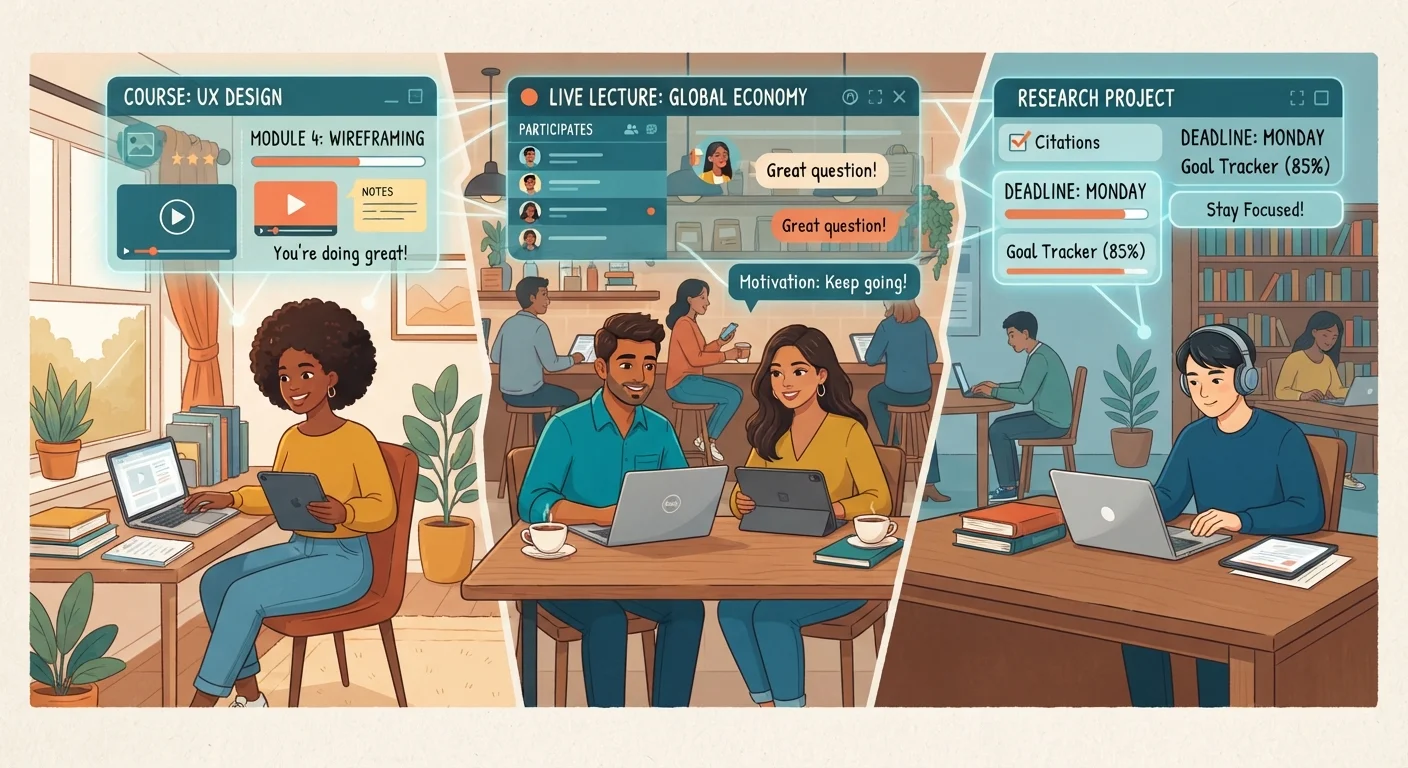
A typical MOOC follows a predictable format. Instruction is delivered through short video lectures - usually five to fifteen minutes each - organized into weekly modules. Learners complete reading materials, quizzes, and sometimes programming assignments or written projects. Discussion forums allow participants to post questions and respond to peers, creating a community despite the asynchronous format.
<15%
Typical MOOC completion rate
Multiple studies across major platforms consistently find that fewer than 15% of enrolled learners complete a MOOC they start.
220M+
Registered MOOC learners globally
According to Class Central's annual MOOC report, global registered learners surpassed 220 million by the early 2020s.
~$50-$300
Typical certificate cost per course
Verified certificate fees vary by platform and course length, generally falling in this range for individual courses as of recent platform pricing.
One distinctive element is peer assessment. Because instructors cannot grade thousands of submissions individually, many MOOCs use systems where learners evaluate each other's work using a shared rubric. This approach is common in humanities and writing-intensive subjects. Automated grading handles multiple-choice and code-based assignments.
MOOCs generally fall into two structural types: self-paced, where content is available anytime and learners set their own schedule, and session-based, where a course runs on a fixed calendar with cohort start dates and weekly deadlines. For a deeper comparison of these formats, see how self-paced and cohort-based structures compare.
The Free vs. Paid Divide
Understanding what costs money in a MOOC is essential before you enroll. Most platforms offer two tiers:
- Audit track (free): Access to video lectures and some readings. Graded assignments and certificates are typically excluded or locked.
- Verified or certificate track (paid): Full access to assignments, instructor feedback mechanisms, and a shareable certificate upon completion. Costs vary widely by platform and course length.
Some platforms have moved toward subscription models, charging a monthly fee for access to a library of courses. Others offer financial aid for learners who qualify. The decision between free auditing and paying for a certificate often comes down to your goal. If you are exploring a new topic out of curiosity, auditing may be sufficient. If you plan to list the credential on a résumé or LinkedIn profile, the certificate track is more appropriate.
Set a Goal Before You Enroll
Learners who enroll with a specific outcome in mind - such as preparing for a job application or gaining a skill for a project - complete MOOCs at significantly higher rates than those browsing out of vague interest. Write down what you want to accomplish and by when before you register. This single step dramatically improves follow-through.
For a broader look at when paying for online education is worth it, this guide on free vs. paid online courses walks through the key trade-offs.
What MOOCs Are - and Aren't - Good For
MOOCs excel at delivering conceptual knowledge and technical skills to motivated, self-directed learners. They are well suited for exploring a new field, supplementing formal education, building job-relevant skills, or satisfying intellectual curiosity. The low barrier to entry makes them practical for busy adults who cannot commit to a degree program.
They are less suited for learners who need structured accountability, hands-on mentorship, or an accredited credential for a regulated profession. A MOOC in nursing, law, or engineering will not replace licensure requirements. MOOCs also do not transfer as academic credits in most cases, so they cannot substitute for coursework in a degree program without explicit institutional agreements.
Before enrolling in any online program - whether a MOOC or something more formal - review this pre-enrollment checklist covering accreditation, format, and cost considerations.
MOOCs vs. Accredited Online Degrees
MOOCs and accredited online degree programs are fundamentally different products. Degree programs are licensed and regionally accredited, carry transferable academic credit, and lead to recognized credentials for professional licensing. MOOCs are non-credit, non-accredited learning experiences - valuable for skills and knowledge, but not equivalent to a degree. If you are weighing the two, clarify your credential goals first.
MOOCs fit within a broader ecosystem of online learning options. For a full picture of how they compare to other formats, this overview of online learning for working adults provides useful context.
Frequently Asked Questions
Most MOOCs allow free auditing, meaning you can watch lectures and read materials at no cost. However, graded assignments, certificates, and some premium features typically require payment. Prices for certificates generally range from around $50 to a few hundred dollars depending on the platform and course.
It depends on the field and employer. In fast-moving sectors like tech, data science, and marketing, MOOC certificates from recognized institutions are often viewed positively. They signal initiative and specific skills. For roles requiring accredited degrees, a MOOC certificate alone won't substitute.
Course lengths vary widely. Many MOOCs are structured over four to ten weeks, with an estimated two to ten hours of work per week. Because most are self-paced, learners can finish faster or stretch the timeline to fit their schedule.
An online degree program is accredited, credits are transferable, and it leads to a formal academic credential. A MOOC is non-credit by default, not accredited in the traditional sense, and far more flexible in terms of enrollment. Some platforms do offer pathways to degrees, but these are distinct products.
Research consistently shows MOOC completion rates hover below 15%. The lack of financial commitment, structured deadlines, and social accountability all reduce follow-through. Setting a specific goal - such as earning a certificate for a job application - significantly improves the odds of finishing.
The content provided on our blog site traverses numerous categories, offering readers valuable and practical information. Readers can use the editorial team’s research and data to gain more insights into their topics of interest. However, they are requested not to treat the articles as conclusive. The website team cannot be held responsible for differences in data or inaccuracies found across other platforms. Please also note that the site might also miss out on various schemes and offers available that the readers may find more beneficial than the ones we cover.