

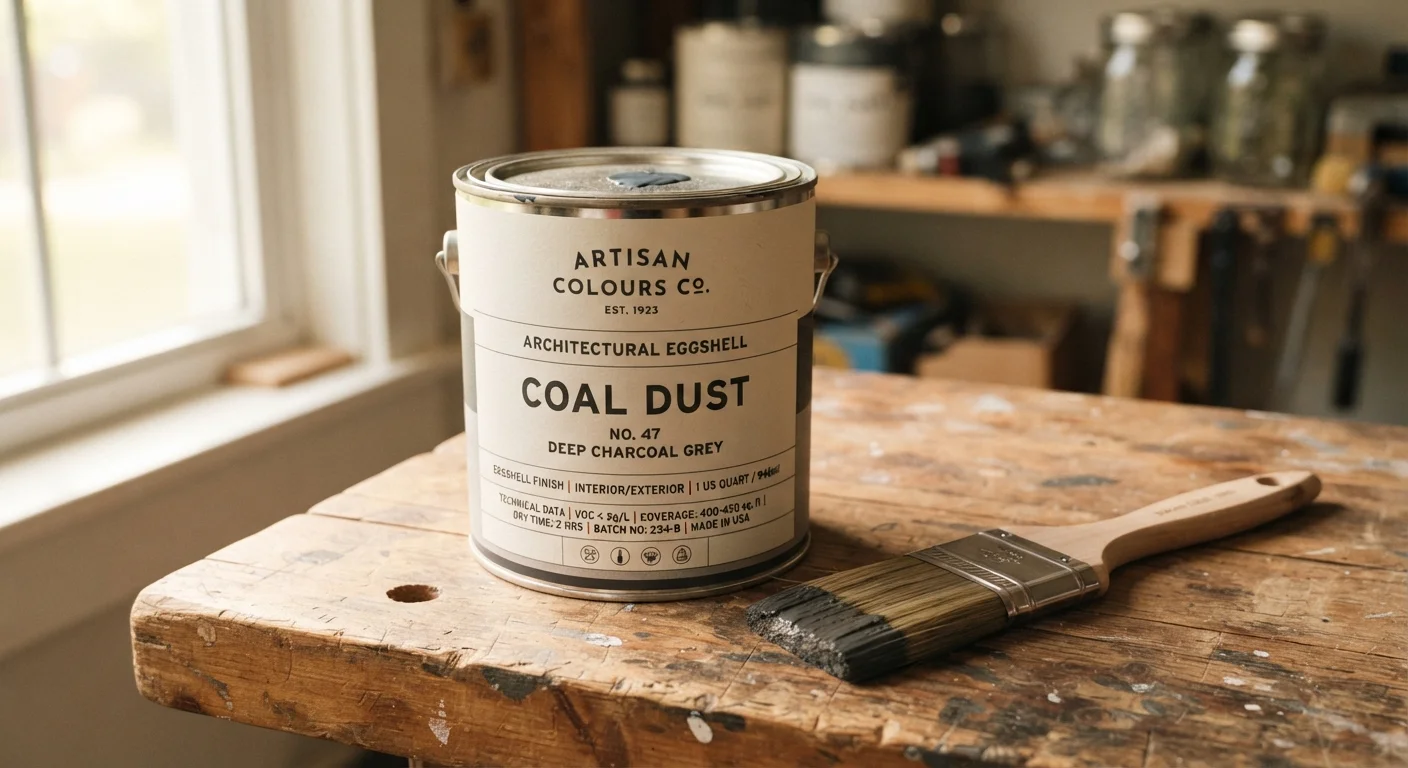
What Sheen Level Actually Tells You
Sheen is one of the first specs listed on a paint label, yet many buyers choose it purely by eye in the store. In practice, sheen determines how your finished wall interacts with light - and how well it holds up to daily life.
Paint sheens run along a spectrum:
- Flat / Matte: No reflectivity. Ideal for ceilings and low-traffic areas. Excellent at hiding surface flaws, but difficult to clean.
- Eggshell: Slight sheen. A popular all-purpose choice for living rooms and bedrooms. More washable than flat, with a softer look.
- Satin: Noticeable sheen. Holds up well to moisture and moderate cleaning - a common pick for hallways and family rooms.
- Semi-Gloss: High reflectivity. Standard for kitchens, bathrooms, and trim. Resists grease and humidity effectively.
- Gloss: Maximum shine. Used primarily on doors, cabinets, and architectural details where durability matters most.
A simple rule of thumb: the higher the sheen, the more cleanable the surface - but the more visible every bump, crack, and imperfection in your wall becomes.
Match Sheen to the Room's Function
Before buying, think about how much traffic the room gets and how often walls need cleaning. High-traffic areas like kitchens and hallways benefit from satin or semi-gloss. Bedrooms and formal living rooms are better candidates for eggshell or matte finishes that look softer under light.
Understanding Coverage: Square Footage Per Gallon
Coverage, often listed as "covers up to X square feet per gallon," tells you how far a can of paint should go. A standard gallon typically lists coverage between 350 and 400 square feet. But that number comes with conditions most labels don't advertise prominently.
Those figures assume a smooth, properly primed surface with consistent application. In a real home with textured walls, raw drywall, or a drastic color change, actual coverage can drop by 20-30%. Rough or porous surfaces absorb more paint; rolling on too thick a coat wastes product and causes drips.
350-400 sq ft
Typical gallon coverage under ideal conditions
Industry-standard paint formulations are generally tested on smooth, primed surfaces in controlled conditions - results vary in real-world applications.
2-4 weeks
Average full cure time for latex wall paint
Paint manufacturers commonly cite a 2-to-4-week cure window before a latex-painted surface reaches its full hardness and washability.
To estimate how much paint you need, measure the total square footage of your walls (height × width of each wall, added together), then subtract roughly 20 square feet per standard door and 15 per window. Divide by the realistic coverage figure - not the optimistic label number - and add 10% as a buffer for touch-ups.
Just like learning to read a nutrition label helps you make smarter food choices, reading a paint label critically - rather than skimming it - puts you in control of your project outcome. (Curious about label literacy in another area of life? See how nutrition labels work for a similar breakdown.)
Dry Time, Recoat Time, and Cure Time: Three Different Things
Most paint labels list at least two time-related specs. Mixing them up is one of the most common causes of paint job failures.
- Dry to Touch
- The surface feels solid and won't transfer wet paint to your hand. This typically happens within 1-2 hours for latex paints. It does not mean the paint is ready for another coat.
- Recoat Time
- The minimum wait before applying a second coat. Usually 4 hours for latex paints, longer for oil-based products. Applying a coat too soon traps solvents beneath the surface, leading to wrinkling or peeling.
- Cure Time
- Full hardening of the paint film - often 2 to 4 weeks. Until a wall is fully cured, it can be scratched or marked more easily. Avoid aggressive cleaning or hanging heavy objects during this period.
Temperature and humidity extend all three timelines. A humid summer bathroom will slow drying significantly; always favor the longer end of any label range when conditions aren't ideal.
Oil-Based Paints Have Longer Timelines
If your label specifies an oil-based or alkyd formula, expect significantly longer dry and recoat times - often 8 hours or more between coats, and several weeks to full cure. Oil-based paints also require mineral spirits for cleanup rather than water. Always check the cleanup instructions on the label to identify which formula you have.
Frequently Asked Questions
Sheen refers to how much light the dried paint surface reflects. Common levels from lowest to highest include flat, matte, eggshell, satin, semi-gloss, and gloss. Higher-sheen paints are more durable and washable but show wall imperfections more clearly.
Coverage estimates - typically listed as square feet per gallon - reflect ideal lab conditions on a smooth, primed surface. Real-world coverage is often lower due to surface texture, absorption, and multiple coats. Plan for roughly 20-25% less coverage than stated as a practical buffer.
Dry time is when the paint feels solid to the touch or can accept another coat. Cure time is when the paint has fully hardened and reached its maximum durability - this can take two to four weeks. Avoid scrubbing freshly painted surfaces until they are fully cured.
Recoat time is the minimum period you must wait before applying a second coat of paint. Applying a new coat too soon can cause peeling, streaking, or lifting of the first layer. Always follow the label's recoat window, and extend it in humid or cold conditions.
Semi-gloss is commonly recommended for kitchens and bathrooms because it resists moisture and is easy to wipe clean. Satin is a slightly softer alternative that still holds up well in higher-humidity spaces. Flat or matte paints are generally not ideal in these rooms.
Not always. 'One coat' claims on labels apply under ideal conditions - proper priming, similar underlying color, and smooth surfaces. In most real-world projects, two coats produce a more uniform, durable result, especially when making significant color changes.
The content provided on our blog site traverses numerous categories, offering readers valuable and practical information. Readers can use the editorial team’s research and data to gain more insights into their topics of interest. However, they are requested not to treat the articles as conclusive. The website team cannot be held responsible for differences in data or inaccuracies found across other platforms. Please also note that the site might also miss out on various schemes and offers available that the readers may find more beneficial than the ones we cover.