

Our Verdict
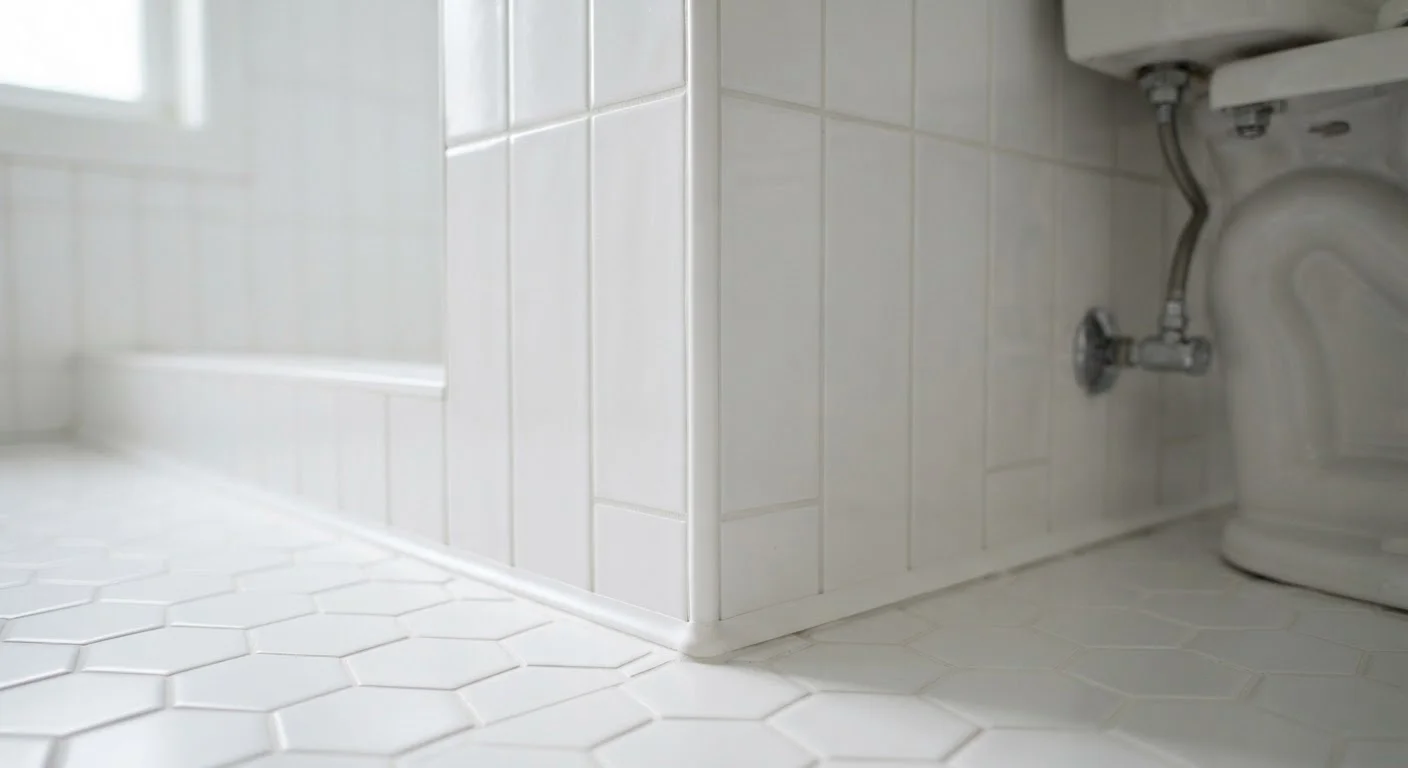
Grout and caulk each have a distinct structural role in a tiled installation. Grout is the right choice between tiles on the same plane, while caulk is the correct material at every corner, edge, and transition point where two surfaces meet or movement is likely. Using the wrong material in either location leads to premature cracking, water damage, or failed adhesion.
| Best for | Recommended |
|---|---|
| Filling joints between tiles on a flat wall or floor | Grout |
| Sealing inside corners, tub-to-tile joints, and floor-to-wall transitions | Caulk |
| Transitions where tile meets a different material such as wood or metal | Caulk |
| Re-sealing existing grout lines between same-plane tiles | Grout |
Why These Two Materials Are Not Interchangeable
Grout and caulk look similar in a finished installation, but they are engineered to do fundamentally different jobs. Grout is a cement-based (or epoxy-based) filler designed to pack the gaps between tiles that sit on the same flat surface. It cures hard, bonds rigidly, and resists the compressive forces tiles place on one another.
Caulk, by contrast, is a flexible sealant - typically silicone or siliconized latex - that stays slightly pliable after curing. That flexibility is not a weakness; it is the entire point. Houses shift with temperature changes, humidity, and settling. Anywhere two surfaces meet at an angle or transition from one material to another, that movement needs a material that can stretch and compress without cracking.
When grout is used in a location that experiences movement - an inside corner of a shower, for example - it will crack, often within months. Those cracks become pathways for water to reach the substrate behind the tile, leading to mold, rot, and eventually a full tile tear-out. Getting the placement right from the start is far less expensive than fixing water damage later.
Where Grout Belongs
Grout is the correct material for the joints between tiles on any single, continuous plane - a shower wall field, a bathroom floor, or a kitchen backsplash. These joints are static: both tiles are embedded in the same mortar bed, and no meaningful movement occurs between them under normal conditions.
| Grout | Caulk | |
|---|---|---|
| Primary material | Cement-based or epoxy | Silicone or siliconized latex |
| Flexibility after curing | Rigid | Remains pliable |
| Best location | Between same-plane tiles | Corners, transitions, edges |
| Handles structural movement | No - will crack | Yes - designed for movement |
| Waterproofing at joints | Moderate with sealer | High when correctly applied |
| Repair method if damaged | Re-grout the joint | Remove and re-caulk |
There are two broad categories of grout to know:
- Sanded grout - contains fine sand particles and is used for joints wider than about 1/8 inch. The sand adds body and reduces shrinkage.
- Unsanded (non-sanded) grout - smoother texture, used for joints 1/8 inch or narrower and for polished or soft stone tiles that sanded grout could scratch.
Epoxy grout is a third option that offers superior stain and chemical resistance; it is worth considering in commercial kitchens or heavily used wet areas, though it is harder to work with and more expensive than cement-based grout.
Where Caulk Belongs
A simple rule covers most situations: any joint that forms a corner, a change of plane, or a transition to a different material should be caulked, not grouted. Common caulk locations include:
- Inside corners where two tiled walls meet in a shower or tub surround
- The joint where a tiled wall meets the tub deck or shower floor
- The perimeter where tile meets a wood floor, countertop, or window sill
- Expansion joints in large floor installations (typically every 20-25 feet, or wherever specified by the tile manufacturer)
- The joint where a tile backsplash meets a countertop
Match Your Caulk Color to Your Grout
Most tile and home improvement stores sell caulk in colors designed to match standard grout shades. Bring a sample of your grout or note the grout manufacturer and color name before shopping. A well-matched caulk line blends into the installation and is nearly undetectable once dry.
Color-matched caulk is widely available and can be closely matched to your grout color, so a properly applied caulk joint is nearly invisible in a finished installation. For wet areas, always choose a mold-resistant silicone or siliconized latex caulk rated for bathroom use.
If you want to go deeper on application technique - including the steps most homeowners skip - see our guide to caulking a bathtub correctly.
Replacing Grout with Caulk in Problem Areas
If you have an existing tiled surface where grout was used in a corner and it has cracked or discolored, the repair is straightforward: remove the grout with a grout saw or oscillating tool, clean the joint thoroughly, and replace it with a color-matched caulk. Do not simply apply caulk over cracked grout - the new caulk will not adhere properly to the old, damaged material and will peel away quickly.
Never Caulk Over Cracked Grout in Corners
Applying fresh caulk on top of old, cracked grout is a temporary fix at best. The caulk cannot bond to deteriorating material and will peel away within a season. Always remove the old grout completely, clean the joint down to the tile edges, and then apply fresh caulk for a lasting result.
Surface preparation is as important as material selection. Both grout and caulk require a clean, dust-free, and appropriately dry surface to bond correctly. For caulk in wet areas, ensure the surface is dry for at least 24 hours before application and allow the full cure time - typically 24 to 48 hours - before exposing the joint to water.
The content provided on our blog site traverses numerous categories, offering readers valuable and practical information. Readers can use the editorial team’s research and data to gain more insights into their topics of interest. However, they are requested not to treat the articles as conclusive. The website team cannot be held responsible for differences in data or inaccuracies found across other platforms. Please also note that the site might also miss out on various schemes and offers available that the readers may find more beneficial than the ones we cover.