

Start here
Why Home Improvement Skills Are Worth Building
Next
The Essential Starter Toolkit
Build good habits
Safety First: Habits That Prevent Most Accidents
Understand your home
Know Your Home Before You Touch It
Make smart choices
When to DIY and When to Call a Pro
Why Home Improvement Skills Are Worth Building
Owning or renting a home means something will always need attention - a dripping faucet, a sticky door, a cracked tile. Learning to handle even a fraction of those issues yourself can save significant money over time and give you a clearer understanding of how your home actually functions.
Beyond cost savings, basic repair skills reduce dependence on contractor schedules, help you catch small problems before they become expensive ones, and build genuine confidence. A homeowner who understands their house is far better equipped to maintain it, communicate with professionals when needed, and make smarter decisions about renovations. See our seasonal home maintenance checklist for a practical roadmap of routine tasks that prevent larger problems down the road.
The Essential Starter Toolkit
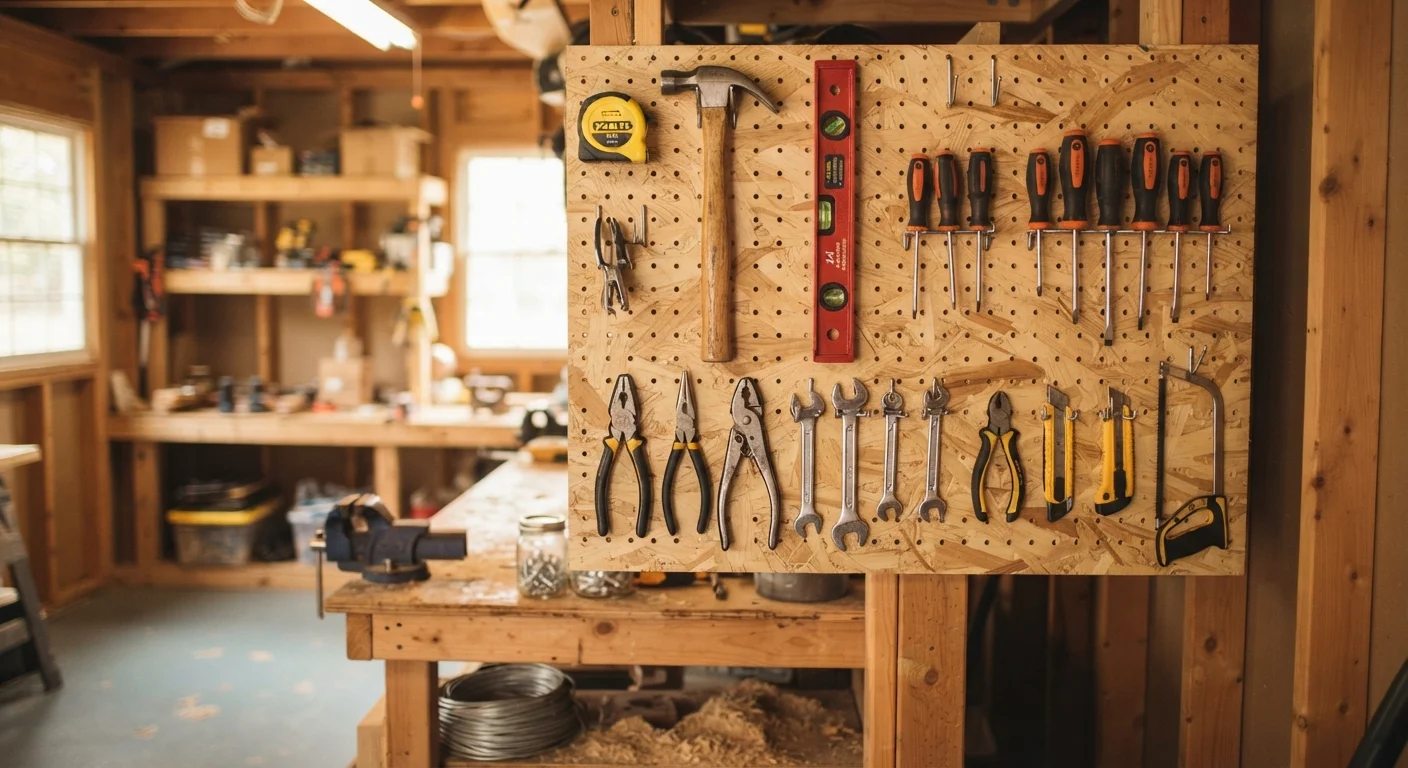
You don't need a truck full of gear to handle most beginner projects. A focused set of quality hand tools will take you much further than a sprawling collection of gadgets you don't know how to use.
- Hammer (16 oz. claw): Drives nails and pulls them out. The workhorse of any toolbox.
- Screwdrivers: Keep at least one medium flathead and two Phillips sizes (#1 and #2). A multi-bit driver saves space.
- Tape measure (25 ft.): Measure twice, cut once. Don't skip this.
- Utility knife: Scores drywall, opens packaging, trims materials cleanly.
- Level (24 in.): Ensures shelves, frames, and fixtures are perfectly horizontal or vertical.
- Adjustable pliers and slip-joint pliers: Grip, turn, and hold a wide range of fasteners and fittings.
- Stud finder: Locates framing behind drywall so you anchor into solid wood, not air.
- Cordless drill/driver: Add this once you're comfortable with hand tools. Invaluable for driving screws and boring holes.
When you're ready to go deeper, our reference guide on screws, bolts, and anchors will help you pick the right fastener for every situation.
Stud
A vertical wooden framing member inside your walls that provides structural support. Screws and anchors driven into studs hold far more weight than those driven into drywall alone.
Circuit breaker
A safety switch in your electrical panel that automatically cuts power to a circuit if it overloads. You also flip breakers manually to safely de-energize circuits before doing any electrical work.
Pilot hole
A small guide hole drilled before driving a screw or a larger drill bit. It prevents wood from splitting and keeps the fastener on a straight, accurate path.
Load-bearing wall
A wall that supports the weight of the structure above it. Removing or altering one without proper engineering can compromise your home's structural integrity - always consult a professional.
Non-contact voltage tester
An inexpensive handheld tool that detects electrical current without touching bare wires. It confirms a circuit is truly off before you work on it.
Anchor
A fastener designed to grip drywall, concrete, or masonry where there's no stud or solid framing directly behind. Different anchor types are rated for different weight loads.
Safety First: Habits That Prevent Most Accidents
Most DIY injuries are preventable. Building consistent safety habits from your very first project is far easier than trying to correct careless patterns later.
Build the Habit Before the Project
Put on your safety glasses before you pick up any tool - even for a task that seems quick. Most eye injuries happen during 'just a second' moments. Making PPE automatic from the start means you'll never have to remember it when it matters most.
- Wear safety glasses whenever you're cutting, drilling, sanding, or working overhead. Debris moves fast and unpredictably.
- Use work gloves when handling rough lumber, sheet metal, or any material with sharp edges.
- Protect your ears with foam earplugs or earmuffs during extended use of power tools.
- Keep your workspace clear. Trips over cords and clutter cause a disproportionate number of tool-related injuries.
- Unplug power tools before changing blades or bits, even if the tool is switched off.
- Never work on live electrical circuits. Switch off the breaker and use a non-contact voltage tester to confirm the circuit is dead before touching any wiring.
Good safety habits also mean knowing your limits. Rushing a project or working while fatigued is when mistakes happen.
Know Your Home Before You Touch It
One of the most important things a new homeowner can do has nothing to do with tools: locate and understand your home's critical systems before anything goes wrong.
- Electrical panel
- Your breaker box controls every circuit in the house. Label each breaker accurately so you know exactly what you're switching off before starting any work.
- Main water shutoff
- Usually located where the supply line enters the house - basement, crawl space, or utility closet. Knowing where this is can stop a burst pipe from flooding your home.
- Individual fixture shutoffs
- Under sinks and behind toilets, small valves let you isolate a single fixture without cutting water to the whole house.
- Gas shutoff (if applicable)
- Located at the gas meter. If you ever smell gas, leave the house immediately and call your utility provider - do not attempt to operate anything yourself.
Spending 30 minutes walking through your home to find these locations is one of the highest-value things you can do as a first-time homeowner.
Never Assume a System Is Off
Even after flipping a breaker or closing a shutoff valve, always verify with a tester or by running the tap before you begin work. Mislabeled panels and valves that don't fully close are common in older homes. A few seconds of verification prevents serious injury or water damage.
When to DIY and When to Call a Pro
Part of becoming a capable DIYer is knowing where the boundary is. Some projects are genuinely beginner-friendly; others carry real risks of injury, property damage, or code violations that can affect your home's value and insurability.
Generally safe for beginners: painting, patching small drywall holes, replacing hardware (handles, hinges, faucet aerators), unclogging drains, hanging shelves into studs, weatherstripping doors and windows.
Proceed with caution and research: replacing a toilet, installing a ceiling fan (with power off and knowledge of wiring), tiling a backsplash, basic deck staining and repair.
Call a licensed professional: Any work involving your electrical panel, new wiring runs, gas lines, structural walls, roof replacement, or anything your municipality requires a permit for. Unpermitted work on regulated systems can void insurance coverage and create problems when you sell. For a balanced look at this decision, see our guide on the honest pros and cons of DIY repairs.
Starting with small, successful projects builds the judgment to know when you're ready to take on something bigger - and when it's smarter to step back. The goal isn't to do everything yourself; it's to be informed enough to make good decisions about your home.
Frequently Asked Questions
Start with a hammer, a set of screwdrivers (flathead and Phillips), a tape measure, a utility knife, a level, and adjustable pliers. These cover the majority of common repairs. Add a cordless drill once you're comfortable with the basics.
Minor repairs like patching drywall, painting, or replacing a faucet fixture generally don't require permits. Larger projects involving electrical wiring, plumbing changes, structural modifications, or new construction typically do. Always check with your local building department before starting.
In most US homes, the main shutoff is located near where the water line enters the house - often in a basement, crawl space, utility room, or near the water meter. Locate and test it before you ever need it in an emergency.
Minor tasks like replacing a light switch or outlet cover can be done safely by informed homeowners after turning off the breaker and verifying the circuit is dead with a non-contact voltage tester. However, any work involving the breaker panel, new wiring runs, or service upgrades should be done by a licensed electrician.
A stud finder is a handheld tool that detects the wooden framing members (studs) hidden behind drywall. You need to anchor into studs - not just drywall - when hanging heavy items like shelves, mirrors, or TVs to prevent them from pulling out of the wall.
Before drilling into any wall, use a combination stud finder that also detects electrical wiring and pipes. Pipes often run vertically near sinks and horizontally near floors and ceilings. When in doubt, drill a small pilot hole and probe carefully before going deeper.
The content provided on our blog site traverses numerous categories, offering readers valuable and practical information. Readers can use the editorial team’s research and data to gain more insights into their topics of interest. However, they are requested not to treat the articles as conclusive. The website team cannot be held responsible for differences in data or inaccuracies found across other platforms. Please also note that the site might also miss out on various schemes and offers available that the readers may find more beneficial than the ones we cover.