

Start here
Why Meal Planning Supports Nutritional Balance
Next
The Core Food Groups to Build Around
Then
How to Structure a Simple Weekly Plan
Watch out for
Common Beginner Pitfalls and How to Avoid Them
Build the habit
Making Your Plan Stick Week After Week
Why Meal Planning Supports Nutritional Balance
Meal planning is the practice of deciding in advance what you'll eat over a given period - typically a week. While it sounds simple, the research behind it is meaningful. Studies published in nutrition journals have linked meal planning to greater dietary variety, higher fruit and vegetable intake, and lower rates of obesity. When you decide what to eat before you're hungry, you sidestep the impulsive choices that often lead to less nutritious options.
For everyday Americans juggling busy schedules, planning removes a recurring source of decision fatigue. Rather than figuring out dinner at 6 p.m., the decision is already made - and the ingredients are already home. This structural advantage is one reason dietitians frequently recommend it as a first step toward better eating habits.
This article provides general nutrition education and is not a substitute for personalized advice from a qualified healthcare provider or registered dietitian.
The Core Food Groups to Build Around
Before you can plan balanced meals, it helps to understand what "balanced" actually means. The U.S. Dietary Guidelines for Americans describe five core food groups that together provide the range of nutrients most people need:
Macronutrients
The three main nutrients that provide energy: carbohydrates, protein, and fat. A balanced diet generally includes all three in appropriate proportions.
Micronutrients
Vitamins and minerals the body needs in smaller amounts - such as iron, calcium, and vitamin C - that support immune function, bone health, and other essential processes.
Dietary fiber
A type of carbohydrate found in plant foods that the body cannot fully digest. It supports digestive health, helps you feel full, and is associated with reduced risk of certain chronic diseases.
Food group variety
Eating foods from multiple groups (vegetables, fruits, grains, proteins, dairy/alternatives) across your meals rather than relying on a narrow set of foods - this helps ensure a broader range of nutrients.
Whole grains
Grains that retain their bran and germ - such as oats, brown rice, and whole wheat - providing more fiber, B vitamins, and minerals than refined (processed) grains.
Decision fatigue
The mental exhaustion that comes from making too many choices throughout the day, which can lead to poorer food decisions when hunger strikes and no plan is in place.
- Vegetables and fruits - Aim for variety in color, which signals a range of vitamins, minerals, and antioxidants.
- Grains - Emphasize whole grains (oats, brown rice, whole wheat) over refined options for more fiber and nutrients.
- Protein foods - Include a mix of sources: legumes, seafood, eggs, poultry, nuts, and seeds alongside any meat you choose.
- Dairy or fortified alternatives - These contribute calcium, vitamin D, and other micronutrients.
- Oils and healthy fats - Present in foods like avocado, olive oil, and fatty fish; important for nutrient absorption and cell function.
No single meal needs to include every group. The goal is variety across the week, not perfection at every sitting. For a visual guide to portioning, our article on building a balanced plate without counting every calorie walks through practical frameworks.
How to Structure a Simple Weekly Plan
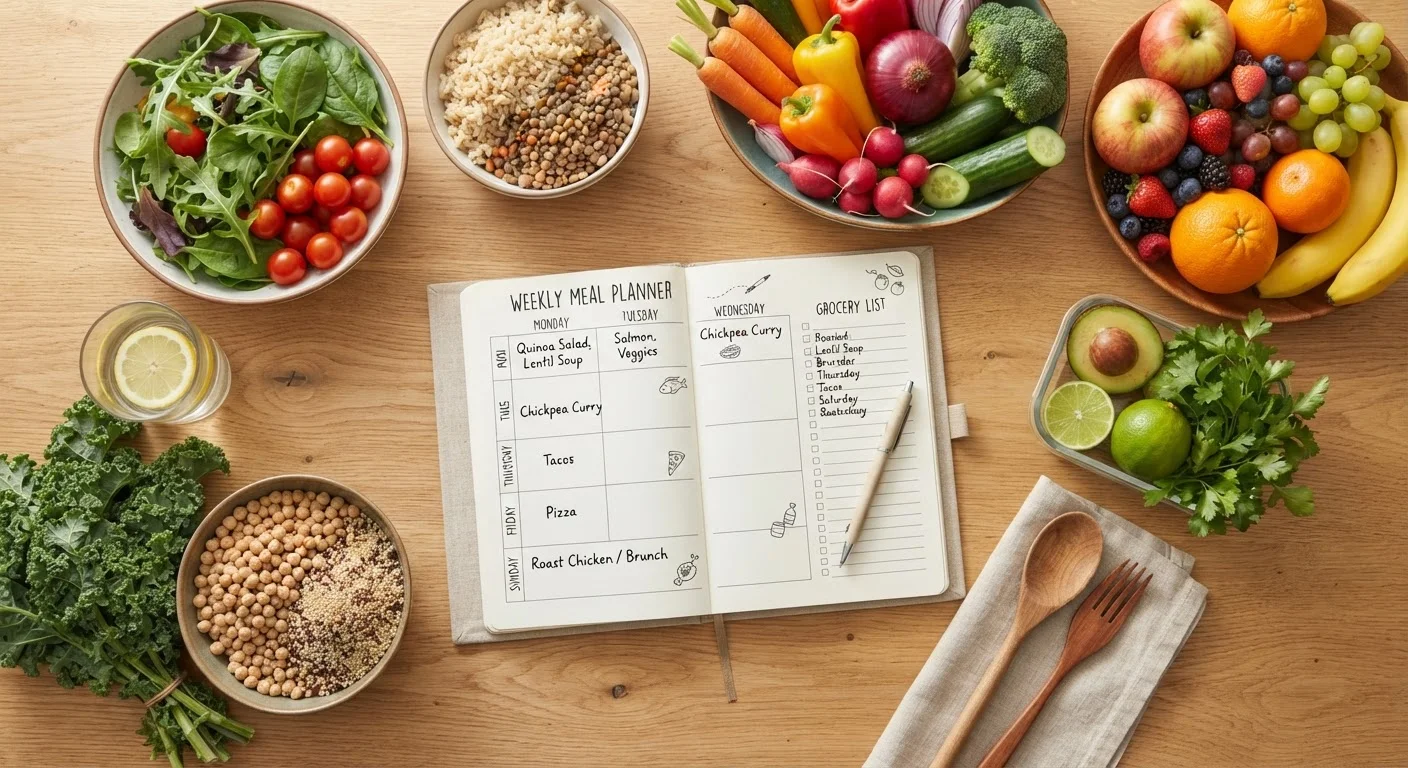
A useful meal plan doesn't need to be elaborate. A one-page template with seven dinner slots and a few lunch ideas is enough to start. Here's a beginner-friendly approach:
- Anchor two or three "formula" meals. A grain bowl, a stir-fry, and a soup or stew are flexible templates you can rotate ingredients through. This reduces planning effort while maintaining variety.
- Plan proteins first. Protein sources - beans, fish, chicken, tofu - tend to be the most time-intensive to prepare, so locking these in first shapes the rest of the meal naturally.
- Add vegetables around your protein. Once you know your protein, choosing one or two vegetables to complement it is straightforward.
- Write a shopping list directly from the plan. This is the critical link between planning and execution. A purpose-built list cuts unnecessary spending and forgotten staples.
Start With a Repeating Template
Rather than planning seven completely different dinners, try assigning loose themes to each night - for example, "meatless Monday," "fish on Wednesday," "soup on Sunday." This reduces the weekly planning effort dramatically while still keeping meals varied and nutritionally diverse.
If growing some of your own produce appeals to you, our guide on starting a vegetable garden from scratch is a helpful companion resource.
Common Beginner Pitfalls and How to Avoid Them
Most people who try meal planning and quit do so for predictable reasons. Knowing them in advance helps.
Avoid the All-or-Nothing Trap
One of the most common reasons people abandon meal planning is expecting perfection. Missing a planned meal or eating off-plan does not mean the week is wasted. Research on habit formation consistently shows that flexibility and self-compassion - not rigid adherence - are better predictors of long-term behavior change. Aim for progress, not perfection.
- Over-planning complexity. Choosing five elaborate new recipes in week one is a fast route to burnout. Start with meals you already make and know you enjoy.
- Ignoring schedule reality. If you have a late work meeting on Thursdays, don't plan a 45-minute recipe that night. Build your plan around your actual week, not an ideal one.
- Treating the plan as rigid. Life interrupts. A flexible plan accounts for one or two "wildcard" nights where takeout or leftovers are the backup - and that's perfectly fine.
- Neglecting the shopping step. A meal plan without aligned groceries is just a wish list. Building consistent shopping habits reinforces the plan; our article on grocery shopping habits that support better eating covers this in depth.
Making Your Plan Stick Week After Week
Consistency is where nutritional benefit actually accumulates. One good week of eating doesn't change long-term health outcomes; repeated patterns do. A few strategies help bridge the gap between intention and habit:
- Batch prep one or two components. Cooking a large pot of grains or roasting a tray of vegetables on Sunday reduces weeknight effort significantly.
- Review and repeat what worked. Keep a simple note of meals your household enjoyed. Over a month, you'll build a personal rotation of reliable, nutritious meals.
- Adjust for seasons. Seasonal produce tends to be more affordable and nutritious at peak freshness. Updating your plan quarterly keeps meals varied and budget-friendly.
- Be patient with yourself. Eating habits are deeply ingrained. Research on behavior change suggests small, consistent improvements outperform dramatic overhauls that fade after a few weeks.
Meal planning is a skill that improves with practice, not a test you pass or fail. Starting with even a partial plan - three dinners mapped out, a breakfast staple stocked - puts you meaningfully ahead of where you'd be without one.
Frequently Asked Questions
Most beginners benefit from planning five to seven dinners and a handful of breakfasts and lunches. You don't need to plan every single meal to see results - even partial planning reduces decision fatigue and impulse eating. Start small and scale up as the habit becomes routine.
No. Calorie counting is one tool, but it is not required for nutritional balance. Focusing on food group variety - filling half your plate with vegetables and fruit, adding a protein source and a whole grain - achieves many of the same goals without tracking numbers. See our guide on <a href="/health-wellness/nutrition-diet/building-a-balanced-plate-without-counting-every-calorie">building a balanced plate without counting calories</a> for practical frameworks.
Simple meals are completely valid. Nutritional balance does not depend on culinary complexity. Meals like grain bowls, sheet-pan vegetables with eggs, or bean-and-vegetable soups can be assembled quickly and still deliver strong nutritional variety.
Planning ahead generally reduces food waste and unplanned purchases, which can lower grocery costs over time. A clear shopping list tied to your weekly plan helps you buy only what you need. For broader budgeting strategies, the <a href="/money-finance/budgeting-basics">Budgeting Basics hub</a> offers helpful frameworks.
Yes, and it can be especially valuable. Planning ahead gives you more control over ingredients and helps ensure you're meeting nutritional needs within your restrictions. Anyone managing a specific health condition or following a medically recommended diet should consult a registered dietitian for personalized guidance.
The content provided on our blog site traverses numerous categories, offering readers valuable and practical information. Readers can use the editorial team’s research and data to gain more insights into their topics of interest. However, they are requested not to treat the articles as conclusive. The website team cannot be held responsible for differences in data or inaccuracies found across other platforms. Please also note that the site might also miss out on various schemes and offers available that the readers may find more beneficial than the ones we cover.