

Why Calorie Counting Isn't the Only Path to Balanced Eating
Calorie tracking apps and meticulous food logs work well for some people - but research suggests they're not sustainable or even necessary for most. A 2018 study published in JAMA found that participants who focused on food quality over calorie quantity achieved similar weight outcomes to those who counted calories precisely. What matters most for long-term health is the overall nutritional pattern of your diet: adequate vegetables, quality protein, whole grains, healthy fats, and variety.
The frameworks in this guide are grounded in evidence from nutrition science and public health guidelines. They're designed to be practical at a kitchen table - not in a lab. Whether you're building better habits from scratch or refining an already decent diet, a structured plate approach removes the math while keeping the nutrition.
What you will need
If you're interested in moving toward more plant-forward meals as part of this approach, our article on plant-based eating covers what nutrients deserve extra attention when animal foods are reduced.
This Is General Nutrition Information
The guidance in this article is intended for general educational purposes and does not constitute medical or dietary advice. Individual nutritional needs vary based on age, health status, activity level, and other factors. If you have a chronic condition, are pregnant, or have specific health goals, please consult a registered dietitian or your healthcare provider before making significant dietary changes.
How to Build Your Balanced Plate: Step-by-Step
The steps below walk you through applying the plate method and supporting habits in your daily routine. You don't need special equipment - just a standard plate, your own hand, and a willingness to pay a bit more attention at mealtimes.
Standard Dinner Plate (9-10 inches)
Used as a visual portioning guide to divide food groups without measuring tools.
Your Hand
A built-in portion reference - palm for protein, cupped hand for grains, fist for vegetables.
Meal Planning Worksheet or Notebook
Helps track variety across the week to ensure nutritional breadth over time.
Learn the Plate Method Framework
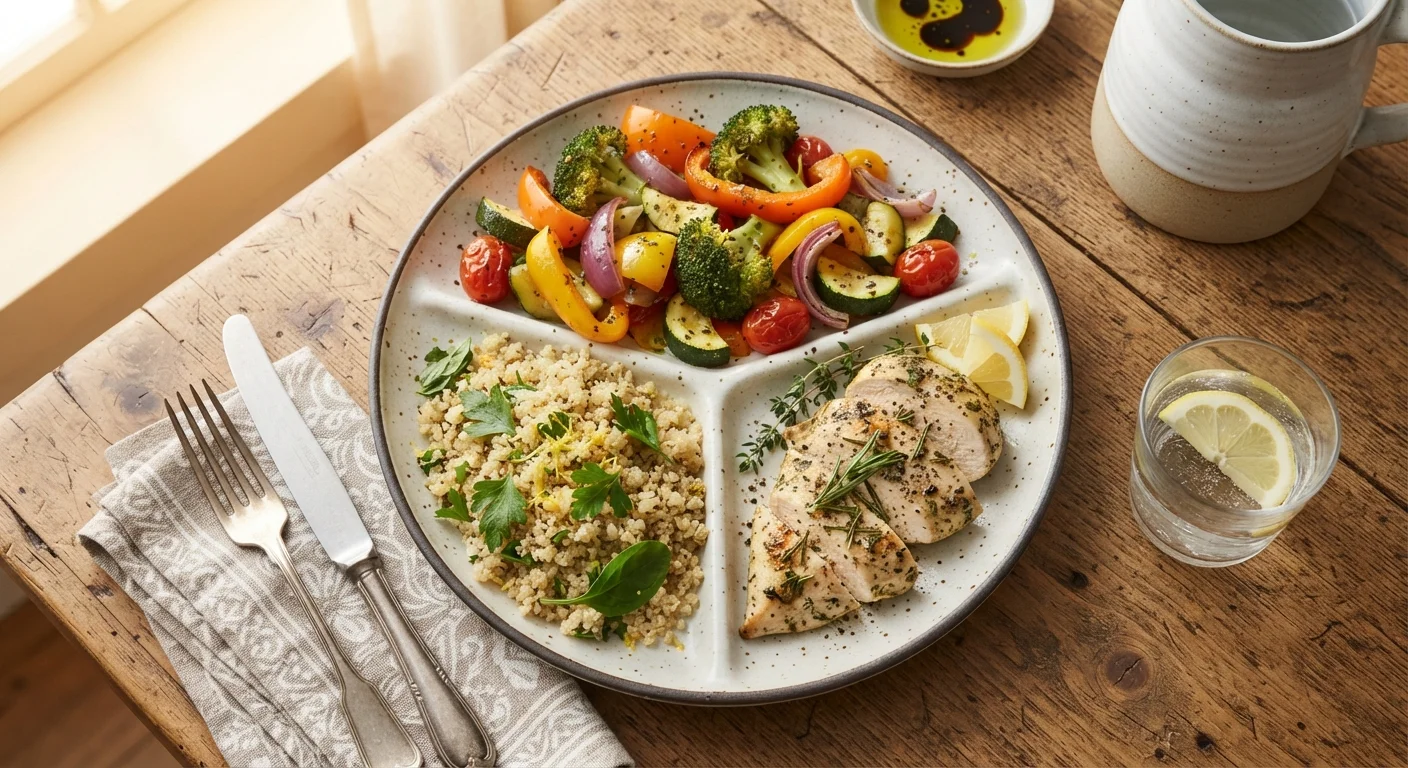
The plate method - endorsed by organizations including the USDA through its MyPlate initiative - offers a simple visual structure. Divide your plate mentally into three sections:
- Half the plate: Non-starchy vegetables (leafy greens, broccoli, peppers, tomatoes, cucumbers)
- One quarter: Lean protein (poultry, fish, beans, tofu, eggs)
- One quarter: Whole grains or starchy carbohydrates (brown rice, quinoa, whole-wheat bread, sweet potato)
Add a small side of dairy or a calcium-rich alternative (low-fat yogurt, fortified plant milk) and a piece of whole fruit to round out the meal nutritionally.
Use Your Hand as a Portable Portion Guide
When you're away from home or without measuring tools, your hand provides a surprisingly consistent reference scaled to your body size:
- Palm: One serving of protein (about 3-4 oz of meat or fish)
- Cupped hand: One serving of grains or starchy vegetables
- Fist: One serving of raw or cooked vegetables
- Thumb: One serving of fats like olive oil, nut butter, or cheese
These aren't precise measurements, but they consistently guide portions in a sensible direction without requiring apps or food scales.
Prioritize Variety Across the Week, Not Perfection at Every Meal
No single meal needs to be nutritionally perfect. The goal is dietary variety over several days. Aim to rotate through different vegetables, alternate protein sources, and cycle whole grain options across the week. This approach naturally expands your intake of diverse vitamins, minerals, and phytonutrients.
If you're curious about structured weekly variety strategies, see our beginner's guide to meal planning for a practical starting framework.
Practice Eating to Comfortable Fullness
Even a perfectly assembled plate can undermine your nutritional goals if you eat past the point of comfortable fullness. Internal hunger and satiety cues - sometimes called intuitive eating signals - are powerful regulators when given the chance to work. Slow down: put your utensils down between bites, aim to take at least 15-20 minutes for meals, and check in with your hunger level midway through.
Research published in journals such as Appetite consistently shows that eating rate and distraction (like screens) affect how well people register fullness. Removing distractions during meals supports better awareness.
Account for What You Drink
Beverages are a meaningful part of your nutritional picture. Sugary drinks, specialty coffee beverages, juice, and alcohol can add significant calories and sugar without contributing much fiber or protein. Water, unsweetened tea, and plain coffee are solid everyday defaults. For a deeper look at how liquid calories fit into your diet, explore our article on how beverages count nutritionally.
Do a Weekly Nutrition Check-In
At the end of each week, take five minutes to reflect - not to judge, but to notice patterns. Did vegetables appear at most meals? Did you rotate protein sources? Were whole grains present regularly? This kind of low-pressure self-audit helps you course-correct gradually. Our weekly nutrition self-check offers a structured checklist to guide this reflection without obsessing over perfection.
Start With One Meal, Not Every Meal
If the plate method feels overwhelming to apply all at once, begin with just one meal per day - lunch is often easiest. Once that feel routine, extend the approach to dinner. Small, consistent shifts compound into lasting habits more reliably than overhauling your entire diet overnight.
Avoid Letting Frameworks Become Rigid Rules
Nutrition frameworks like the plate method are flexible guides, not strict mandates. Treating them as absolute rules can fuel an unhealthy relationship with food. If you notice anxiety around eating, signs of disordered eating patterns, or significant unintended weight changes, speak with a healthcare professional.
This article is for informational purposes only and is not a substitute for professional medical or dietary advice. Consult a qualified healthcare provider or registered dietitian for guidance tailored to your individual health needs.
The content provided on our blog site traverses numerous categories, offering readers valuable and practical information. Readers can use the editorial team’s research and data to gain more insights into their topics of interest. However, they are requested not to treat the articles as conclusive. The website team cannot be held responsible for differences in data or inaccuracies found across other platforms. Please also note that the site might also miss out on various schemes and offers available that the readers may find more beneficial than the ones we cover.