

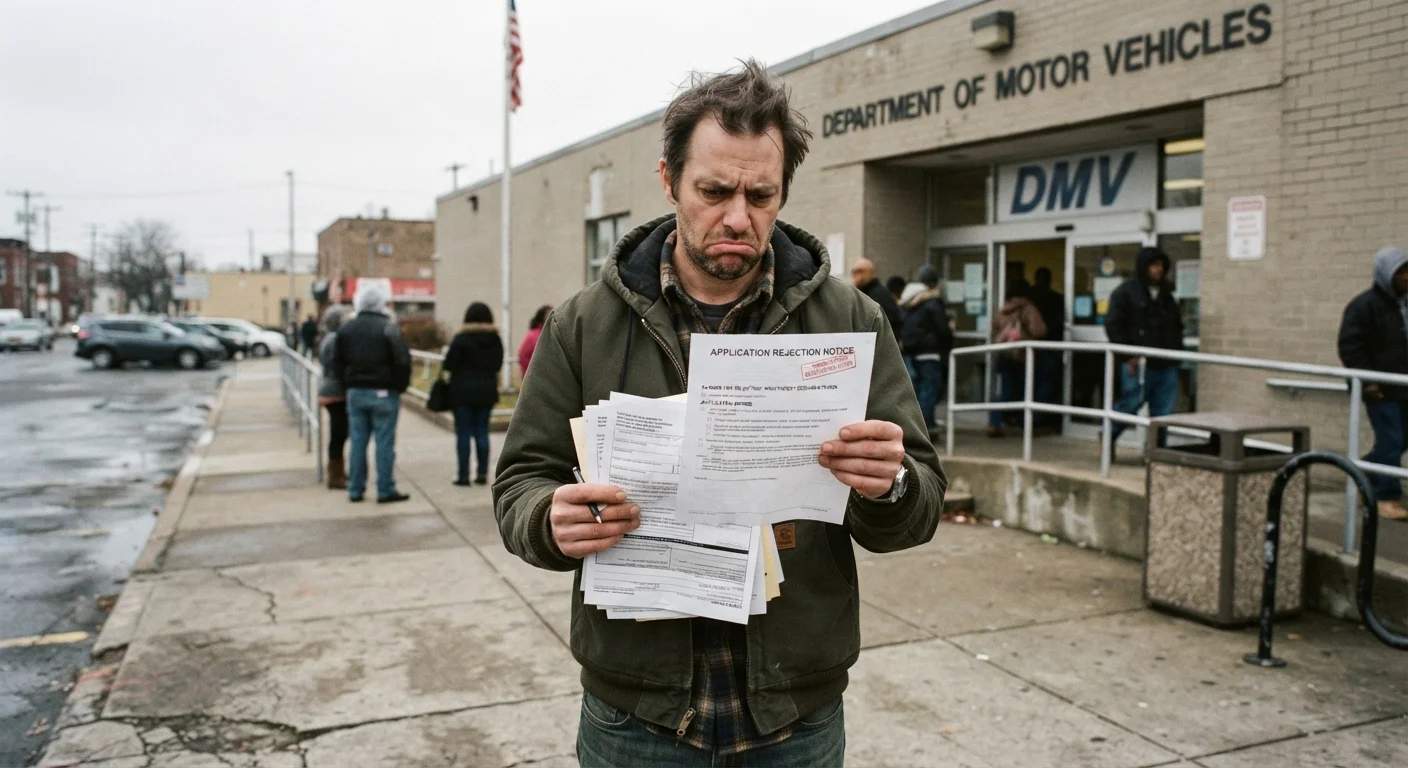
Why Registration Rejections Happen More Than You'd Expect
Registering a vehicle sounds routine - but state motor vehicle agencies enforce precise documentation standards, and even minor errors trigger rejection. Understanding where the process breaks down is the first step toward preventing it.
Whether you're a first-time owner or renewing for the fifth time, the stakes are real. If you're preparing for a fresh purchase, the guide for first-time car owners covers the full administrative picture you'll need to navigate.
Submitting an incomplete or incorrect title.
Why it happens: Buyers often receive a title at the point of sale and assume it is ready to file, without checking that all fields are properly filled out and signed.
Showing up without proof of valid insurance.
Why it happens: Drivers sometimes confuse having an active policy with having the right documentation in hand, or their temporary insurance cards have expired.
Ignoring outstanding fines, tolls, or tickets tied to the vehicle.
Why it happens: Drivers are often unaware that unpaid violations are linked to their license plate or VIN through state databases, effectively placing a registration hold.
Failing emissions or safety inspection and attempting to register anyway.
Why it happens: Some drivers believe registration and inspection are separate processes that can be handled independently, or they hope an older failing result won't surface.
Missing the registration renewal window entirely.
Why it happens: Renewal notices can be lost in the mail or overlooked, especially when address records are outdated at the DMV.
Paying incorrect fees or using an unsupported payment method.
Why it happens: Registration fees vary by vehicle weight, age, county, and other factors - drivers frequently estimate the amount rather than verifying the exact figure.
What to Check Before You Submit Your Registration
Prevention is significantly easier than correction. Running through a short pre-submission checklist can eliminate most of the issues described above before they become rejections.
1 in 4
Registration applicants turned away for documentation issues
DMV staff and automotive administrative reports consistently identify incomplete or incorrect documentation as the single most frequent reason for same-day rejections.
48 hrs
Typical processing delay after paying a registration hold
Fine payment clearances and lien releases often take 24-72 hours to appear in state motor vehicle databases, catching drivers off guard on renewal day.
- Title: Confirm all fields are fully completed, signed by all parties, and free of alterations.
- Insurance: Bring a current card or policy document - check whether your state accepts digital proof.
- Inspection certificate: Verify the date is within your state's accepted window and that the vehicle passed without open violations.
- Outstanding holds: Query your DMV account online for any fines, tolls, or suspensions linked to your plate or VIN.
- Exact fees: Use the DMV's fee calculator and confirm payment methods accepted at your specific location.
Driving with Expired Registration Is Illegal
Operating a vehicle with an expired registration can result in fines, vehicle impoundment, or even a court appearance depending on your state. If your registration has lapsed while a rejection is being resolved, contact your local DMV to understand your options - some states offer temporary operating permits. Do not assume a pending application protects you from enforcement.
If you recently bought from a private seller in another state, read the warning below carefully - out-of-state titles involve additional requirements that catch many drivers by surprise.
Out-of-State Titles Require Extra Steps
If you recently moved or purchased a vehicle from another state, your title may need to be converted before registration can proceed. Some states also require a physical VIN inspection before accepting an out-of-state title. Missing this step is a common reason first-time registrations are denied outright - check your new state's DMV requirements before submitting anything.
For a broader view of what to confirm before any significant drive, the road trip safety and legal readiness checklist is a practical resource that includes registration verification alongside mechanical checks. And if you're heading into a fresh purchase, reviewing the new car purchase checklist before you sign anything can prevent paperwork gaps that delay your registration from the very start.
The content provided on our blog site traverses numerous categories, offering readers valuable and practical information. Readers can use the editorial team’s research and data to gain more insights into their topics of interest. However, they are requested not to treat the articles as conclusive. The website team cannot be held responsible for differences in data or inaccuracies found across other platforms. Please also note that the site might also miss out on various schemes and offers available that the readers may find more beneficial than the ones we cover.