

Why Chicago Deserves Its Own Orientation
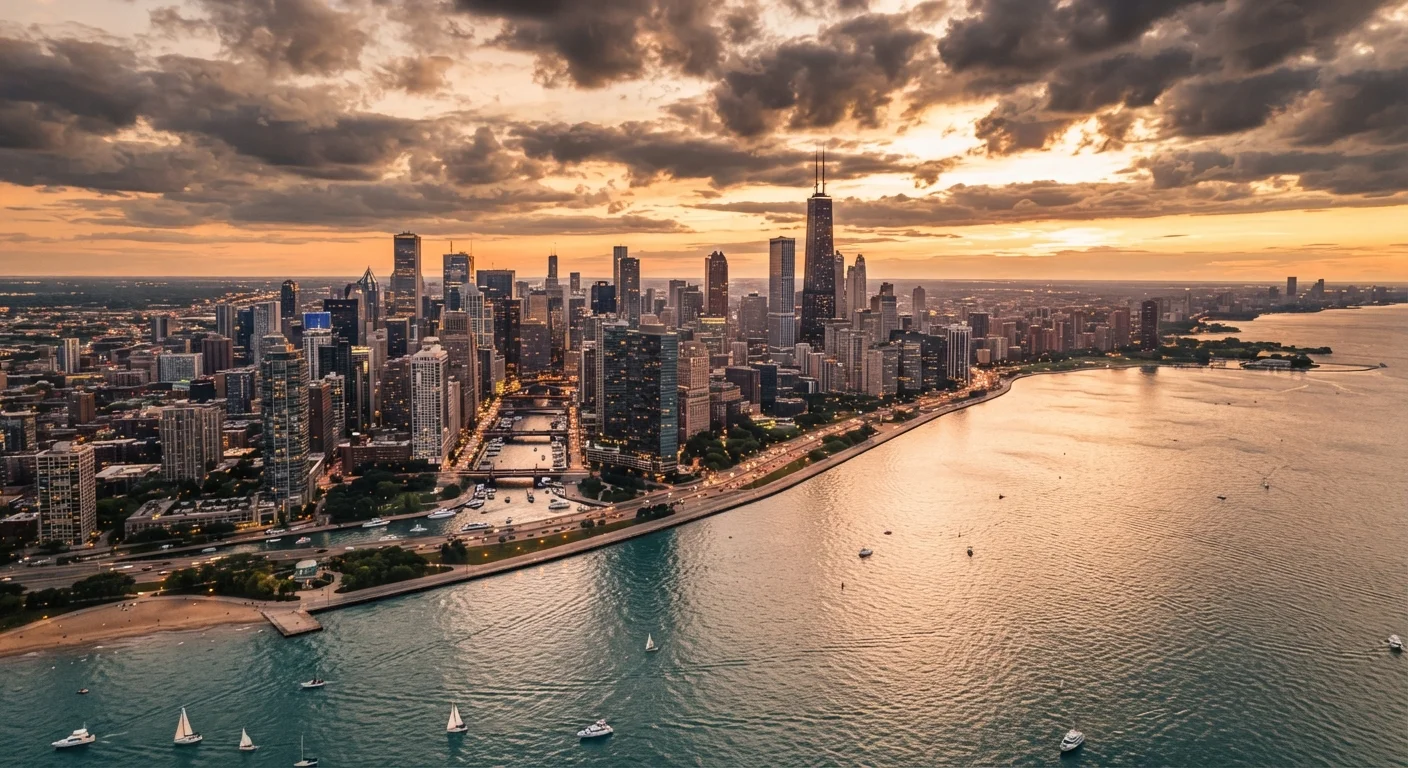
Chicago is one of those cities that can genuinely overwhelm a first-time visitor — not because it's unwelcoming, but because it's so much more layered than most people expect. It's the third-largest city in the United States, stretching 30 miles along the southwestern shore of Lake Michigan, and its scale alone makes a little pre-trip homework worthwhile.
Unlike a city organized around a single draw — a theme park, a beach strip, a casino corridor — Chicago rewards visitors who understand its structure. The neighborhoods are distinct and geographically spread. The transit system is excellent but has quirks. The weather can shift dramatically. And the cultural offerings, from architecture to live music to food traditions, run genuinely deep.
This guide is designed to give you the mental map that makes your visit feel purposeful rather than rushed. For broader trip-planning principles, a solid itinerary framework can also help you organize your days once you have the lay of the land.
77
Official Chicago community areas
The City of Chicago officially recognizes 77 distinct community areas, each with its own history and character.
30 miles
Chicago's lakefront length
Chicago's lakefront stretches roughly 30 miles along Lake Michigan, nearly all of it publicly accessible parkland.
~2.7M
City population (2020 U.S. Census)
Chicago is the third-most-populous city in the United States, according to the 2020 Census.
Neighborhoods Worth Knowing Before You Arrive
Chicago is organized into 77 official community areas, but a first-time visitor needs only a working knowledge of a handful of anchor neighborhoods to navigate comfortably.
- The Loop: Downtown's commercial and cultural core, home to Millennium Park, the Art Institute, and a dense cluster of landmark skyscrapers. Most visitors spend significant time here.
- River North: Just north of the Chicago River, packed with galleries, restaurants, and nightlife. Easy walking distance from the Loop.
- Lincoln Park and Lakeview: Residential neighborhoods on the North Side with a relaxed, walkable character, great for exploring independently.
- Wicker Park and Bucktown: On the Northwest Side, these adjoining neighborhoods have a creative, eclectic energy with independent shops and diverse dining.
- Pilsen: A vibrant Mexican-American neighborhood on the Lower West Side, known for street murals, galleries, and some of the city's best taquerias.
- Hyde Park: On the South Side, home to the University of Chicago and the Museum of Science and Industry — worth the slightly longer L ride.
Understanding that Chicago's neighborhoods each carry their own identity — rather than being interchangeable urban backdrop — is one of the first things that separates a satisfying visit from a forgettable one.
Pick one or two neighborhoods as your base and explore outward — don't try to sample every area in a single trip. Depth beats breadth in a city this layered.
Travelers who anchor themselves in a neighborhood tend to discover the rhythm of a city far more authentically than those who race between distant districts each day.
Download the Transit Stop Chicago app or use Google Maps in transit mode before you arrive — learning the L color lines in advance saves real time on the ground.
Navigating a new transit system while simultaneously managing luggage and orientation is one of the most common stress points for first-time city visitors.
Getting Around: Transit, Taxis, and the L Train
Chicago's transit backbone is the CTA, which operates both the elevated and subway rail system (universally called the L) and an extensive bus network. For most visitors staying in or near downtown, the L is the fastest, cheapest, and most reliable way to move around.
The L has eight color-coded lines. The Red Line runs north-south and connects many of the most visited neighborhoods. The Blue Line connects O'Hare International Airport directly to downtown for a flat fare — a significant cost advantage over taxis or ride-shares for airport arrivals. The Green Line reaches Hyde Park on the South Side.
Airport Transit Tip: Take the Blue Line
Arriving at O'Hare? The Blue Line CTA train runs directly from the airport to downtown (the Loop) for a flat CTA fare — significantly less expensive than a taxi or ride-share for a solo traveler. The ride takes approximately 45 minutes and drops you near most downtown hotels. Midway Airport is served by the Orange Line with similar convenience.
Ventra is the CTA's contactless payment system; loading a Ventra card or using a contactless bank card at the turnstile is the smoothest approach. Single-ride paper tickets cost more per trip. A Ventra app on your phone handles everything digitally.
Ride-share apps are widely available and useful for late-night travel or reaching neighborhoods not well-served by rail. Driving and parking in Chicago is feasible but not necessary for most visitors — garages are expensive downtown, and street parking rules can be complicated. For first-timers, the L and occasional ride-shares cover virtually every destination worth reaching.
Architecture and Iconic Landmarks
Chicago essentially invented the modern skyscraper. After the Great Fire of 1871 leveled much of the city, the rebuilding that followed produced an extraordinary concentration of architectural innovation that continues to define the skyline today. For visitors with any interest in built environments, Chicago is genuinely one of the best cities in the world to simply walk around and look up.
Key landmarks any first-time visitor should encounter include Millennium Park (Cloud Gate — the reflective "Bean" sculpture — anchors its northwest corner), the Chicago Riverwalk, the historic Chicago Board of Trade building, and the 360 Chicago observation deck atop the 875 North Michigan Avenue building. The Chicago Architecture Center on the Riverwalk offers both guided river boat tours and walking tours that provide real context for what you're seeing rather than just an exterior view.
The Art Institute of Chicago, located at the edge of Millennium Park, holds one of the most significant art collections in the United States and warrants at least a half-day. Grant Park, the sprawling lakefront green space that borders downtown, connects several of these landmarks on foot.
“Chicago is an architectural Mecca — nowhere else in America is the relationship between a city's physical form and its civic identity so legible in a single skyline.”
— Blair Kamin, Pulitzer Prize-winning architecture critic, Chicago Tribune
Chicago's Food Culture: What to Actually Eat
Yes, Chicago has deep-dish pizza — and it's worth trying at least once. But framing Chicago's food identity around deep-dish alone would be like judging New Orleans solely by beignets. The city's culinary landscape is far more varied and reflects its long history as a city of immigrants and working-class neighborhoods.
A more complete Chicago food tour might include: an Italian beef sandwich (thinly sliced, dipped in jus, served on crusty Italian bread), a Chicago-style hot dog (no ketchup — this is culturally significant), a tamale from Pilsen, smoked ribs from a South Side institution, and Polish food in the Milwaukee Avenue corridor. The city's Chinatown, anchored near Cermak Road on the Near South Side, is one of the most active in the Midwest.
Chicago also has a serious fine-dining tradition, with multiple James Beard Award-winning restaurants and a concentration of chef-driven spots that compete nationally. The restaurant scene in neighborhoods like the West Loop and River North rewards wandering and spontaneous reservation-hunting.
One practical note: many beloved neighborhood spots don't take reservations and have lines — especially on weekend evenings. Building flexibility into your meal plans beats trying to schedule every bite in advance.
Seasonal Realities: Timing Your Visit
Chicago's nickname — the Windy City — undersells its actual climate range. Winters are legitimately harsh: temperatures regularly drop below 0°F with wind chill, and lake-effect conditions can make outdoor exploration miserable without serious preparation. Anyone visiting between December and February should pack layering systems, not just a heavy coat.
Spring (April–May) is beautiful but unpredictable — warm days can give way to cold snaps. Summer (June–August) is when Chicago truly shines: the lakefront beaches fill up, outdoor festivals run almost every weekend, and the city's parks become social centers. It's peak tourism season, so popular restaurants and attractions are busiest.
Summer Festival Weekends Fill Up Fast
Chicago's summer festival calendar is extensive — events like the Chicago Jazz Festival, Lollapalooza, and Taste of Chicago draw enormous crowds that affect hotel prices, transit capacity, and restaurant wait times across the city. If your visit overlaps with a major festival weekend, book accommodations well in advance and build extra time into any plans that involve transit or popular restaurants.
Fall (September–October) is widely considered an ideal time to visit — temperatures are comfortable, crowds thin, and the city's parks and neighborhoods take on a pleasant seasonal character without the winter bite.
Regardless of when you visit, Chicago's indoor cultural offerings — museums, concert venues, theaters, the architectural interior tours — mean the city never runs out of things to do even when the weather doesn't cooperate. If you're planning your first solo trip to a domestic city and Chicago is on your list, a first-timer's solo travel guide can help you think through logistics with confidence.
This article provides general travel orientation information. Conditions, operating hours, transit fares, and entry requirements for specific venues can change — always verify current details directly with providers or official city sources before your trip.
The content provided on our blog site traverses numerous categories, offering readers valuable and practical information. Readers can use the editorial team’s research and data to gain more insights into their topics of interest. However, they are requested not to treat the articles as conclusive. The website team cannot be held responsible for differences in data or inaccuracies found across other platforms. Please also note that the site might also miss out on various schemes and offers available that the readers may find more beneficial than the ones we cover.