

Our Verdict
No single Hawaiian island is universally "the best" — each suits a different kind of traveler. Oahu works for first-timers who want cultural depth and lively nightlife; Maui appeals to those seeking a polished resort experience with excellent snorkeling and road-trip scenery; Kauai rewards hikers and solitude-seekers; and the Big Island dazzles anyone fascinated by geology, astronomy, or sheer ecological variety. Identifying your travel priorities is the surest way to choose the right island.
| Best for | Recommended |
|---|---|
| First-time visitors and history enthusiasts | Oahu |
| Luxury resort stays and scenic road trips | Maui |
| Hikers and those craving remote, rugged nature | Kauai |
| Volcano explorers and eco-curious travelers | The Big Island |
What Every Hawaiian Island Shares
Before diving into the differences, it helps to appreciate what unites the archipelago. All of Hawaii's major islands sit within a tropical climate zone — expect warm temperatures year-round, though the north and east sides of each island tend to receive more rainfall than their drier leeward shores. That moisture is exactly what feeds the lush valleys and dramatic waterfalls that make Hawaii look like a painting.
Hawaiian culture runs deep on every island. Traditional hula, the Aloha Spirit, and deep respect for the land — known as mālama ʻāina — are woven into daily life across the state. Visitors are warmly welcomed but are also expected to engage respectfully: stay on marked trails, never remove natural materials from parks, and be mindful of sacred sites. Water lovers will find world-class snorkeling, surfing, and whale watching (particularly between December and April) across all islands. And the food scene — a vibrant fusion of Native Hawaiian, Japanese, Filipino, and Portuguese traditions — is a highlight wherever you land.
Consider the Leeward Side for Sunshine
On every Hawaiian island, the west (leeward) shore is generally drier and sunnier than the east (windward) shore. If guaranteed beach weather is a priority, book lodging on the leeward side of whichever island you choose. Windward coasts are lusher and often cheaper — great if you love waterfalls and greenery over guaranteed sun.
Oahu: The Heartbeat of Hawaii
Oahu is home to Honolulu, the state capital, and Waikiki Beach, Hawaii's most recognized stretch of sand. For first-time visitors, it's an ideal introduction: the island has the most developed tourism infrastructure, the widest range of accommodation options, and a robust public transit system. The Pearl Harbor National Memorial, Diamond Head State Monument, and the Bishop Museum offer historical and cultural depth you won't find elsewhere.
The tradeoff? Oahu is the most populated island, and popular spots like Waikiki and the North Shore surf beaches can feel genuinely crowded, especially during peak travel periods. Travelers seeking solitude may find it jarring after imagining a quiet tropical escape.
Maui: Scenic Roads and Resort Elegance
Maui consistently ranks among Americans' favorite Hawaiian islands, and it earns that affection. The Road to Hana — a winding, 64-mile coastal drive past waterfalls, bamboo forests, and black-sand beaches — is one of the country's great road-trip experiences. Haleakalā National Park, where visitors can watch sunrise from above the clouds at a 10,023-foot summit, is genuinely unforgettable.
The island's West Maui and South Maui resort corridors offer polished amenities and excellent snorkeling at places like Molokini Crater. Maui tends to carry a higher price tag than Oahu for comparable lodging, reflecting its premium reputation. It's a strong choice for travelers prioritizing a mix of luxury and landscape.
| Oahu | Maui | Kauai | Big Island | |
|---|---|---|---|---|
| Best for | First-timers, city lovers | Resort stays, scenic drives | Hikers, nature seekers | Volcano & eco explorers |
| Crowd level | High | Moderate–High | Low–Moderate | Low–Moderate |
| Nightlife & dining | Excellent | Good | Limited | Moderate |
| Top natural attraction | Diamond Head | Haleakalā summit | Nā Pali Coast | Hawaiʻi Volcanoes NP |
| Ecological variety | Moderate | Moderate | High | Very high |
| General price level | Moderate | High | Moderate–High | Moderate |
| Public transit access | Best in state | Limited | Very limited | Very limited |
Kauai: The Garden Isle's Untamed Beauty
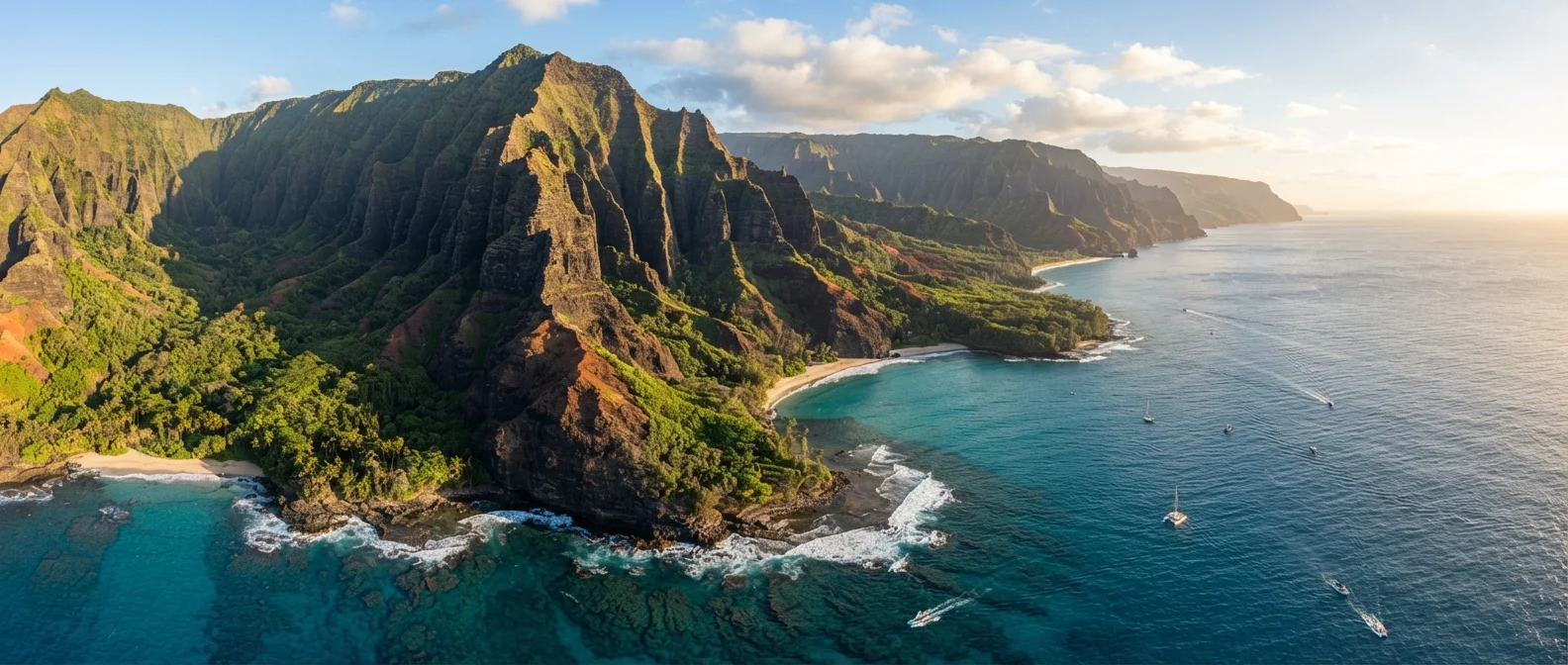
Kauai is the oldest of the main Hawaiian islands geologically, and that age shows in its deeply eroded valleys and dramatic cliffs. The Nā Pali Coast — accessible only by boat, helicopter, or a strenuous multi-day hike — is one of the most breathtaking coastlines anywhere in the United States. Waimea Canyon, dubbed the "Grand Canyon of the Pacific," adds another layer of geological wonder.
Development is deliberately limited on Kauai, meaning fewer large resorts and a quieter, more intimate atmosphere. That's a feature for nature lovers and those wanting to unplug, but it also means fewer dining options and less nightlife. Travelers who prioritize outdoor adventure over evening entertainment will feel right at home.
Trail Permits and Closures Change Frequently
Kauai's most iconic trails — including sections of the Kalalau Trail along the Nā Pali Coast — require permits that are limited and often booked well in advance. Some areas close seasonally due to erosion or weather damage. Always verify current permit requirements and trail status through official Hawaii state park resources before your trip, as conditions can change without much notice.
The Big Island: Size, Diversity, and Active Volcanoes
Hawaii Island — commonly called the Big Island — is larger than all the other main Hawaiian islands combined. That size translates into an almost implausible ecological variety: within a single day, you can stand on a black-sand beach, walk through a lava field at Hawaiʻi Volcanoes National Park, and look through a world-class telescope on the summit of Mauna Kea (note that summit access requires permits and is subject to conditions — verify details with the relevant authorities before your trip).
The Kona and Kohala coasts on the west side are sunny and resort-friendly, while the Hilo side is lush, rainy, and refreshingly unhurried. The Big Island suits travelers drawn to extremes — extreme landscapes, extreme ecological range, and experiences genuinely unavailable anywhere else on Earth.
4,028 sq mi
Area of the Big Island
The Big Island is larger than all other main Hawaiian islands combined, according to the U.S. Geological Survey.
10
Climate zones on the Big Island
The Big Island contains roughly 10 of Earth's 14 climate zones, a level of ecological diversity rare anywhere on the planet.
~30 min
Average inter-island flight time
Most inter-island flights between the main Hawaiian islands operate in under 30 to 50 minutes, making island-hopping practical.
The content provided on our blog site traverses numerous categories, offering readers valuable and practical information. Readers can use the editorial team’s research and data to gain more insights into their topics of interest. However, they are requested not to treat the articles as conclusive. The website team cannot be held responsible for differences in data or inaccuracies found across other platforms. Please also note that the site might also miss out on various schemes and offers available that the readers may find more beneficial than the ones we cover.