

The '6-Month Rule' That Catches Travelers Off Guard
You glance at your passport, see the expiration date is two years away, and figure you're good to go. Then you arrive at the airport and get denied boarding. It happens more than you'd think — and the culprit is usually the six-month validity rule.
Dozens of countries require your passport to be valid not just for the duration of your trip, but for at least 3 to 6 months after your planned return date. The logic is practical: it gives immigration officials a buffer in case your travel is extended unexpectedly. Countries in the Schengen Area, Southeast Asia, and parts of Africa and the Middle East commonly enforce this rule.
Airlines are often required to verify compliance before you board — which is why they, not just border agents, may turn you away. Before any international trip, verify requirements for every country on your itinerary through official embassy websites or the U.S. State Department's country-specific travel pages. For a broader look at entry rules, see our guide on visas, entry requirements, and travel authorizations.
Check Every Country on Your Itinerary
If your trip involves multiple countries — say, a European rail journey through France, Italy, and Croatia — check the validity and blank-page requirements for each one separately. Requirements aren't uniform across borders, and a passport that satisfies one country may fall short for another. Your final destination isn't the only one that matters.
Blank Pages: More Important Than They Look
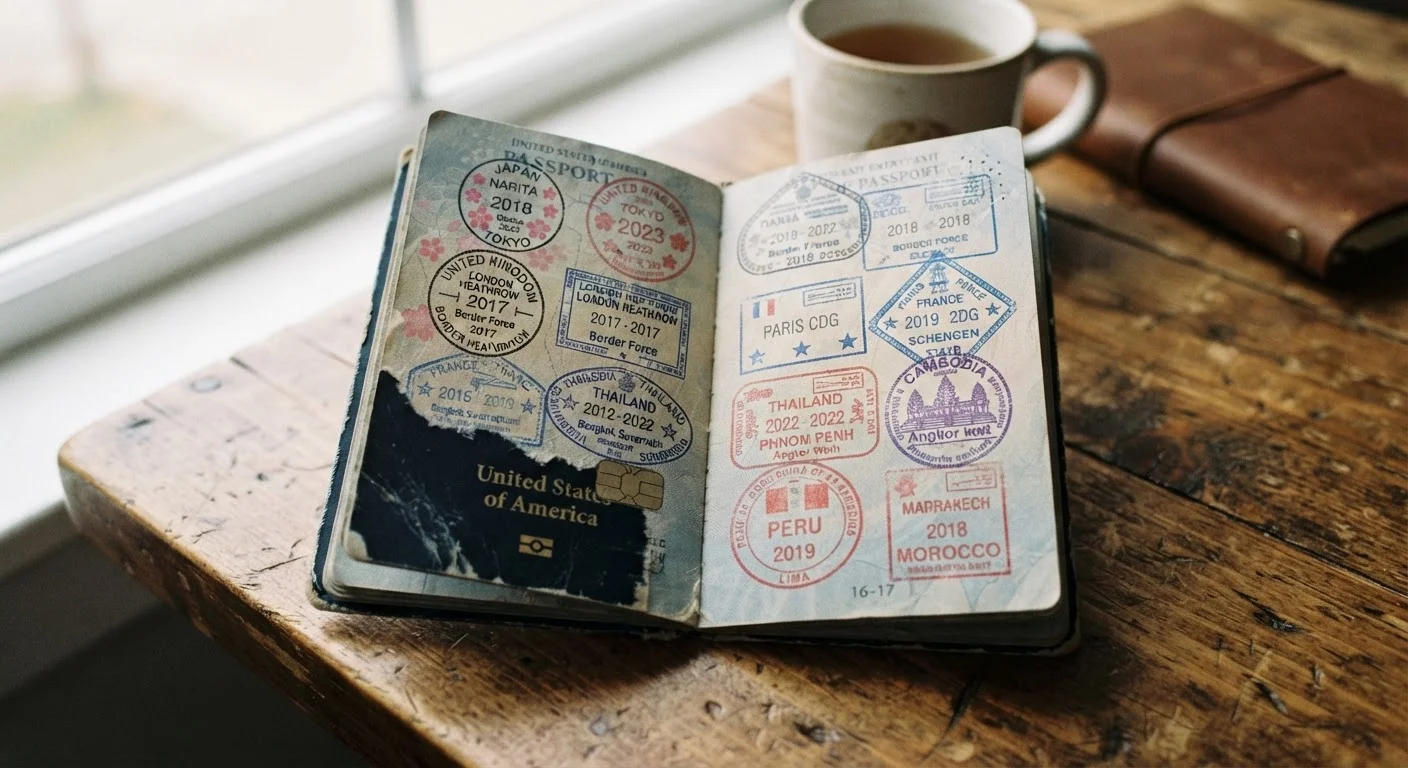
Flip through your passport and count the blank pages — not the ones with faded stamps, the fully clean ones. Many travelers are surprised to find they're running low, especially after a few multi-country trips.
Entry and exit stamps consume pages fast. Some countries require one full blank page per entry; others want two facing blank pages for a visa sticker. When countries have strict requirements and your pages are nearly full, you may be denied entry even with a valid passport.
U.S. passports are issued in two sizes: a standard 28-page book and a 52-page book available at the same cost. If you travel internationally more than once or twice a year, the larger book is a practical choice. You cannot add pages to a current U.S. passport — that option was discontinued — so a passport with full pages requires renewal regardless of the expiration date.
~145M
U.S. passports currently in circulation
The U.S. State Department reports that approximately 145 million valid U.S. passports were in circulation as of recent years, reflecting how common international travel has become for Americans.
52 pages
Pages in the larger U.S. passport book
The U.S. offers a 52-page passport book at no extra charge compared to the standard 28-page version — a practical choice for frequent travelers who accumulate stamps quickly.
The Information Page: Handle With Care
The photo page — officially the biographical data page — is the most important page in your passport. It contains your photo, name, date of birth, passport number, and the machine-readable zone at the bottom. Border control scanners read this page electronically, so any damage to it is treated seriously.
Water damage that causes pages to swell, a torn laminate over your photo, ink marks from a pen, or even a bent cover can render your passport questionable. Customs and airline agents have discretion to reject a passport they consider damaged, even if the information is still legible.
Store your passport in a protective cover and keep it away from heat, moisture, and back pockets. If you're traveling and notice damage mid-trip, contact the nearest U.S. embassy or consulate — they can issue an emergency passport for travel home. For a fuller picture of what to expect at international borders, our first-timer's international travel primer has you covered.
“Your passport is your most critical travel document. Protecting it — and understanding its limitations — is the first step toward a smooth international journey.”
— U.S. Department of State, Official guidance on international travel preparedness
Passport Book vs. Passport Card: Know the Difference
The U.S. passport card is a wallet-sized alternative that's cheaper and more convenient — but its uses are strictly limited. It's valid for land border crossings and sea travel to Canada, Mexico, Bermuda, and the Caribbean. For any international flight, you need the full passport book, full stop.
Some travelers keep both: the card for quick road trips across the Canadian or Mexican border, and the book for everything else. That's a sensible strategy, but carrying only the card and forgetting about a flight restriction is a common, costly mistake.
Planning a trip abroad and want to make sure your documents — and your expectations — line up? Our article on planning an international trip from the U.S. walks through the full pre-departure checklist, including passport and visa timelines. And if you've been hesitant about going abroad, common international travel myths might address some of the concerns holding you back.
Verify Requirements Before You Book
Passport and entry rules can change with little notice due to diplomatic shifts, public health events, or policy updates. The U.S. State Department's official travel pages (travel.state.gov) and individual country embassy websites are the most reliable sources. Travel agents and airline staff can help, but official government sources should always be your primary reference.
Frequently Asked Questions
It depends on the destination. Many countries — including popular ones in Europe, Asia, and Latin America — require at least 6 months of validity beyond your departure date. Some require only 3 months. Always check the specific requirements for each country you plan to visit through its official embassy website or the U.S. State Department's country information pages.
Most countries require at least one or two blank pages for entry stamps, but some require two to four. Visa applications often need a full blank page as well. If you're visiting multiple countries on one trip, the pages add up quickly. U.S. passports come with 17 or 52 visa pages; frequent travelers often choose the larger book.
No. A U.S. passport card is only valid for land border crossings and sea travel to certain neighboring countries and territories, including Canada, Mexico, and the Caribbean. It is not accepted for international air travel. You need a full passport book for any flight abroad.
A damaged passport — especially one with a torn or defaced information page, water damage, or a separated cover — may be considered invalid by airline staff or foreign border agents. The U.S. Department of State recommends replacing a damaged passport before traveling, even if the expiration date hasn't passed.
Routine processing times vary and can stretch from several weeks to several months depending on application volume. Expedited service is available for an additional fee and is typically faster. For urgent travel, in-person appointments at a regional passport agency may be available. Check the State Department's current processing time estimates before planning.
Yes. Every U.S. citizen, regardless of age, needs their own individual passport for international air travel. Both parents or guardians must typically consent to a minor's passport application, and minors under 16 must apply in person. Passport validity and blank-page rules apply to children's passports just as they do for adults.
The content provided on our blog site traverses numerous categories, offering readers valuable and practical information. Readers can use the editorial team’s research and data to gain more insights into their topics of interest. However, they are requested not to treat the articles as conclusive. The website team cannot be held responsible for differences in data or inaccuracies found across other platforms. Please also note that the site might also miss out on various schemes and offers available that the readers may find more beneficial than the ones we cover.