

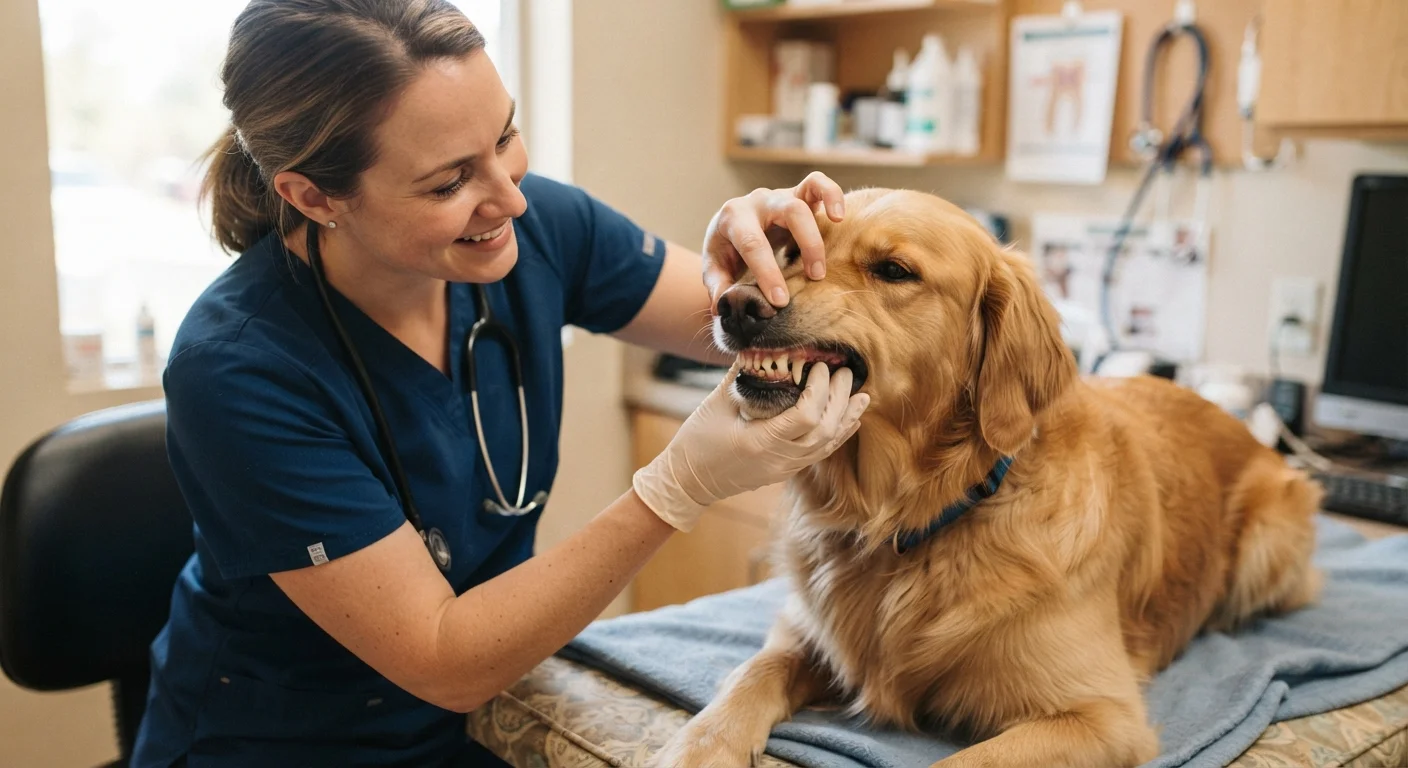
Why Dental Disease Flies Under the Radar
Periodontal disease — infection and inflammation of the structures supporting the teeth — is consistently cited by veterinary organizations as one of the most common health conditions diagnosed in adult cats and dogs. Yet most owners don't recognize it until it's advanced, because pets are instinctively wired to conceal pain. A dog that's quietly struggling to chew may simply eat more slowly or favor one side of its mouth; a cat may become subtly less social or groom less. Neither of these signals tends to read as a dental emergency.
The biology moves quickly. Plaque — a sticky film of bacteria — begins forming on tooth surfaces within hours of eating. If it isn't disrupted, it mineralizes into tartar (calculus) within days. Tartar can't be brushed away; it requires professional scaling. Once tartar accumulates below the gumline, it triggers inflammation, tissue loss, and eventually bone destruction. By the time bad breath, visible tartar, or drooling becomes noticeable, the disease is usually well established.
Understanding that this process starts early and progresses steadily is the first step toward changing how owners approach it — not as an occasional concern, but as a core part of everyday pet health habits.
~80%
Dogs with periodontal disease by age three
The American Veterinary Medical Association notes that most dogs show signs of periodontal disease by the time they reach three years of age.
~70%
Cats affected by dental disease by age three
Veterinary dental experts similarly estimate the majority of adult cats have some degree of oral disease, often going undetected without routine exams.
Common Mistakes That Let Dental Disease Advance
Most dental disease in pets isn't the result of negligence — it's the result of gaps in awareness. The following mistakes are extremely common, but all of them are preventable once owners understand what to look for and why the details matter.
Assuming bad breath is normal and not a warning sign.
Why it happens: Many owners accept "dog breath" or "cat breath" as an inevitable part of having a pet, not realizing that persistent halitosis is almost always a sign of active bacterial buildup or infection.
Waiting for visible signs before acting on dental health.
Why it happens: Owners often expect dental disease to look dramatic — loose teeth, bleeding gums, obvious pain. Because pets mask discomfort so effectively, visible symptoms often don't appear until disease is at an advanced stage.
Skipping anesthetic dental cleanings out of fear.
Why it happens: Anesthesia understandably concerns many owners, and some are drawn to advertised "anesthesia-free" dental cleanings as a seemingly safer alternative. However, veterinary dental organizations broadly caution that non-anesthetic cleanings cannot adequately address subgingival (below the gumline) disease.
Relying solely on dental chews or treats as oral care.
Why it happens: Pet dental products are heavily marketed, and owners reasonably assume that products labeled "dental" provide comprehensive protection. Some do offer a degree of mechanical plaque disruption, but none replicate the effectiveness of brushing.
Not considering breed and size as risk factors.
Why it happens: Owners often think dental disease is random, when in fact small and toy breeds — as well as brachycephalic (short-muzzled) animals like Pugs and Persian cats — face significantly higher dental disease risk due to crowded or misaligned teeth.
Never Use Human Toothpaste on Pets
Many human toothpastes contain xylitol, fluoride, or other compounds that are toxic to cats and dogs even in small amounts. Always use toothpaste specifically formulated and labeled for pets. If you're unsure which product is appropriate, your veterinarian or veterinary technician can recommend options suited to your pet's size and temperament.
For a broader view of how dental checkups fit into your pet's overall wellness schedule, see the preventive care calendar every pet owner should know.
What Responsible Dental Care Actually Looks Like
Effective oral care for pets combines professional veterinary cleanings with consistent home maintenance. Professional cleanings — performed under anesthesia to allow thorough scaling above and below the gumline, probing, and dental X-rays — are the only way to meaningfully address established tartar and assess bone health. Frequency depends on the individual animal's breed, age, and history, which is why veterinary guidance matters more than any general rule of thumb.
At home, daily tooth brushing using a pet-safe toothpaste is considered the gold standard by veterinary dental specialists. Flavored formulas designed for pets make the process more tolerable; human toothpaste should never be used because many formulations contain ingredients that are toxic to animals. If brushing isn't achievable, veterinarian-approved dental chews, water additives, or enzymatic products may offer supplemental support — but these are additions to brushing, not replacements for it.
Oral Disease Can Affect More Than the Mouth
Chronic periodontal infection introduces bacteria into the bloodstream repeatedly over time. Veterinary research has identified associations between severe dental disease and changes in heart, kidney, and liver function in pets. This doesn't mean dental disease directly causes organ failure, but it does underscore why oral health belongs in conversations about overall wellness — not just grooming. Discuss your pet's dental health as part of every routine exam.
Changes in eating behavior, pawing at the mouth, or reluctance to chew hard food can all be early signals worth noting. These and other subtle cues are covered in our guide to early warning signs of illness every pet owner should know. When in doubt, a veterinary exam is always the right first step.
This article is for general informational purposes only and does not constitute veterinary medical advice. Always consult a licensed veterinarian for guidance specific to your pet's health needs.
The content provided on our blog site traverses numerous categories, offering readers valuable and practical information. Readers can use the editorial team’s research and data to gain more insights into their topics of interest. However, they are requested not to treat the articles as conclusive. The website team cannot be held responsible for differences in data or inaccuracies found across other platforms. Please also note that the site might also miss out on various schemes and offers available that the readers may find more beneficial than the ones we cover.