

Why a Wagging Tail Alone Tells an Incomplete Story
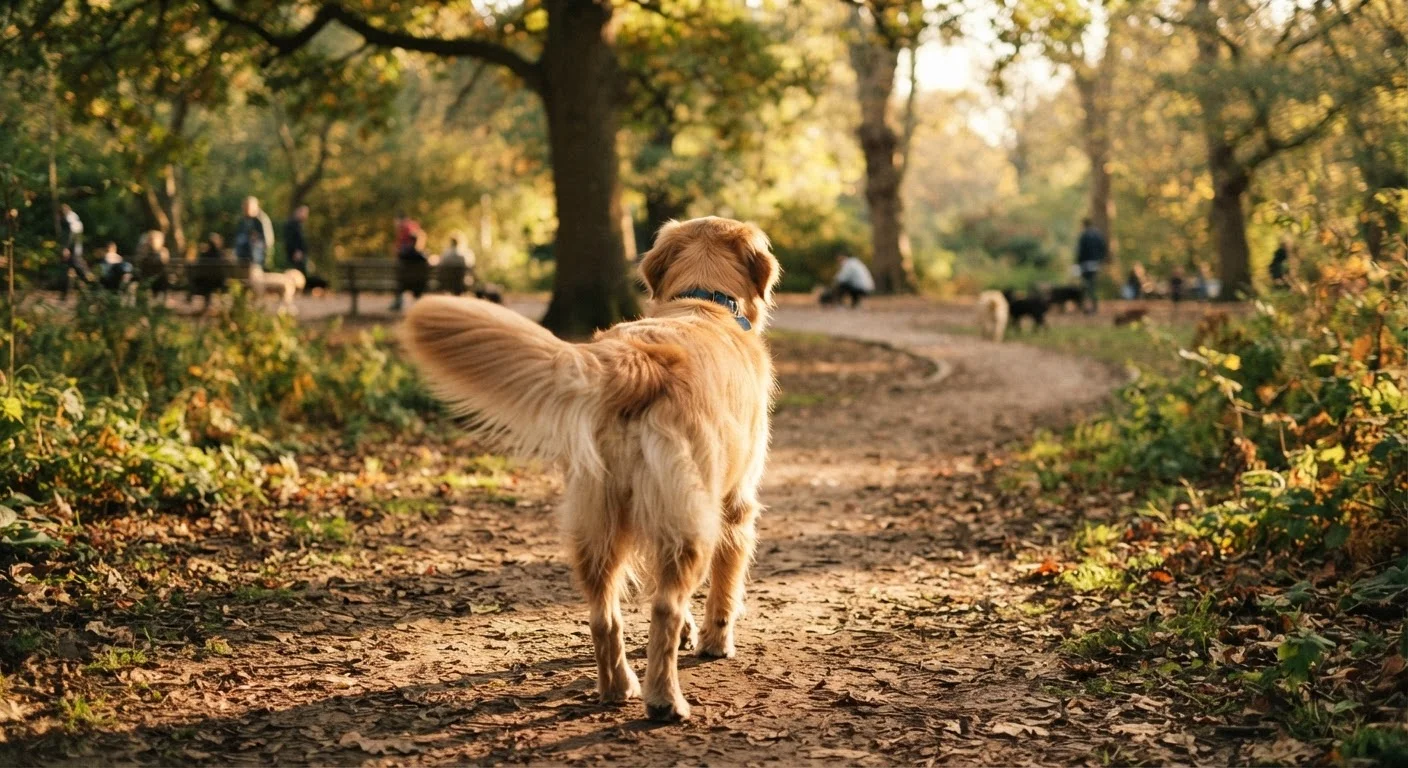
Most people learn early that a wagging tail means a happy dog. That interpretation is partially correct — but only partially. Tail movement is just one dimension of canine communication. Height, speed, direction of wag, and stiffness all carry distinct meaning, and reading them in isolation can lead owners to misread a dog's actual emotional state.
Dogs inherited a sophisticated postural communication system from their wolf ancestors. The tail functions as a visible signal to other animals — and to attentive humans — broadcasting confidence, anxiety, arousal, and intent. Understanding that system helps owners respond appropriately rather than inadvertently reinforcing stress or misreading a warning signal as friendliness.
For a broader look at how body posture, ear angle, and facial tension all work together, see What Your Pet's Body Language Is Actually Telling You.
| Primary signal dimensions | Height, speed, width, and direction of wag |
| Neutral tail position | Varies by breed; generally in line with the spine |
| Right-biased wag association | Positive emotional states (approach, familiarity) (Siniscalchi et al., Current Biology, 2013) |
| Left-biased wag association | Negative or cautious arousal (Siniscalchi et al., Current Biology, 2013) |
| Tail-tucked posture indicates | Fear, submission, or pain — warrants space or vet check |
| Breeds with limited tail signals | Screw-tailed (Bulldogs) and docked breeds |
Decoding Tail Height: The Confidence Spectrum
A dog's neutral tail position varies by breed — Greyhounds naturally carry their tails lower than Akitas — so always interpret height relative to the individual dog's baseline, not against a universal standard.
Hackles
The strip of fur running along a dog's spine from neck to tail. Hackles raise (piloerection) in response to arousal — which can indicate excitement, fear, or threat — and are a key contextual signal to read alongside tail position.
Appeasement signal
A behavior a dog uses to communicate non-threat and reduce tension. Examples include a slow low wag, lip licking, or averting the gaze. These signals are often directed at humans or other dogs perceived as dominant or unpredictable.
Lateralization
The tendency for the left and right brain hemispheres to process different types of information. In dogs, this influences which direction the tail wags based on whether the emotional response is positive or negative.
Tail carriage
The habitual height and angle at which a dog holds its tail at rest. Carriage varies by breed and individual, and baseline carriage must be established before interpreting changes in position as meaningful signals.
Piloerection
Involuntary raising of hair along the spine or tail, commonly called 'raised hackles.' It is a reflexive arousal response and does not by itself indicate aggression — it also occurs during excitement or stress.
High Tail Carriage
A tail held above the back or straight up signals arousal and heightened alertness. In a confident, socialized dog this often accompanies excitement or assertiveness. In an unfamiliar or tense situation, a rigidly vertical tail — especially with a stiff body — can signal dominance challenge or readiness to escalate. It does not automatically mean aggression, but it warrants careful attention to the rest of the dog's body.
Mid-Level Carriage
A tail held roughly in line with the spine is the classic relaxed, neutral position. The dog is attentive but not particularly stressed or stimulated. This is the baseline to calibrate against.
Low or Tucked Tail
A tail dropped below the back signals discomfort, submission, or fear. The lower and tighter the tuck — pulling the tail between the hind legs and pressing it against the belly — the more significant the distress. A dog in this posture needs space, not pressure. Sudden or persistent tail tucking without an obvious trigger may warrant a veterinary check, since pain can also cause this posture. See Signs That a Pet's Behavior Change May Signal a Health Issue for guidance on when behavioral shifts deserve professional attention.
Reading the Wag: Speed, Width, and Direction
Research in animal behavior has identified that wag direction carries meaning. A broad wag that shifts noticeably to the dog's right side is generally associated with positive emotional states; a wag biased toward the left side has been linked to more cautious or negative arousal. This asymmetry reflects lateralization in the canine brain and is not always visible to the naked eye, but it helps explain why not all wags look or feel the same.
Broad, Loose Wag
Wide, sweeping tail motion — often involving the entire hindquarters — is the most reliably friendly signal. The body is loose, movement is fluid, and the dog is typically oriented toward interaction. This is the wag most people correctly read as welcoming.
Fast, Stiff Wag
A high-frequency wag with a rigid tail and tense body is not a relaxed greeting. This pattern often accompanies high arousal — which can precede both play and conflict. Combined with a forward-leaning posture, hard eye contact, or a raised hackle line, a stiff fast wag warrants caution.
Slow, Low Wag
A tentative, slow wag held low signals uncertainty or appeasement. The dog may be trying to communicate non-threat without fully committing to engagement. This is common in shy dogs, dogs meeting unfamiliar people, or dogs that have learned their environment is unpredictable.
Dogs are also remarkably attuned to the emotional signals we broadcast. For more on that reciprocal relationship, see Reading the Room: How Pets Sense and Respond to Human Emotions.
~90°
Wag direction shift linked to emotional valence
Research by Siniscalchi and colleagues found dogs' tails wag with a rightward bias during positive states and a leftward bias during negative arousal, reflecting brain lateralization.
3–4 signals
Body cues to read alongside the tail
Animal behavior experts consistently recommend reading ears, eyes, body weight, and hackle state together with tail position before assessing a dog's emotional state.
Putting It Together: Context Always Wins
No single tail signal operates in isolation. A dog greeting a familiar owner at the door with a high, sweeping wag and a loose body is almost certainly happy. The same high tail on a stiff dog approaching an unfamiliar dog is a very different picture. Always read tail signals alongside ear position, eye softness, body weight distribution, and hackle state before drawing conclusions.
Breed anatomy also matters. Screw-tailed breeds like Bulldogs have limited tail mobility. Spitz breeds like Huskies carry their tails naturally curled over the back. Dogs with docked tails communicate the same emotional states through the stub that remains, but the signals can be harder to read — for humans and for other dogs alike.
If your dog's tail behavior changes suddenly — especially if accompanied by reluctance to move, guarding behavior, or other physical symptoms — consult your veterinarian. Pain in the tail, spine, or hindquarters can alter posture without any obvious external cause. For a species-by-species comparison, Cat Body Language: A Field Guide to What Your Cat Is Telling You illustrates how differently cats use their own tails to signal intent.
Docked and Screw Tails Limit Readability
Dogs with docked tails or naturally short, curled, or screw-shaped tails cannot broadcast the full range of tail signals. Other dogs — and humans — may find these animals harder to read, which can contribute to social friction at dog parks or in multi-dog households. If your dog has limited tail mobility, pay closer attention to ear position, eye softness, and overall body tension as compensating signals.
This article is for general informational and educational purposes only and is not a substitute for professional veterinary advice. If you have concerns about your dog's behavior or health, consult a licensed veterinarian or certified animal behaviorist.
The content provided on our blog site traverses numerous categories, offering readers valuable and practical information. Readers can use the editorial team’s research and data to gain more insights into their topics of interest. However, they are requested not to treat the articles as conclusive. The website team cannot be held responsible for differences in data or inaccuracies found across other platforms. Please also note that the site might also miss out on various schemes and offers available that the readers may find more beneficial than the ones we cover.