

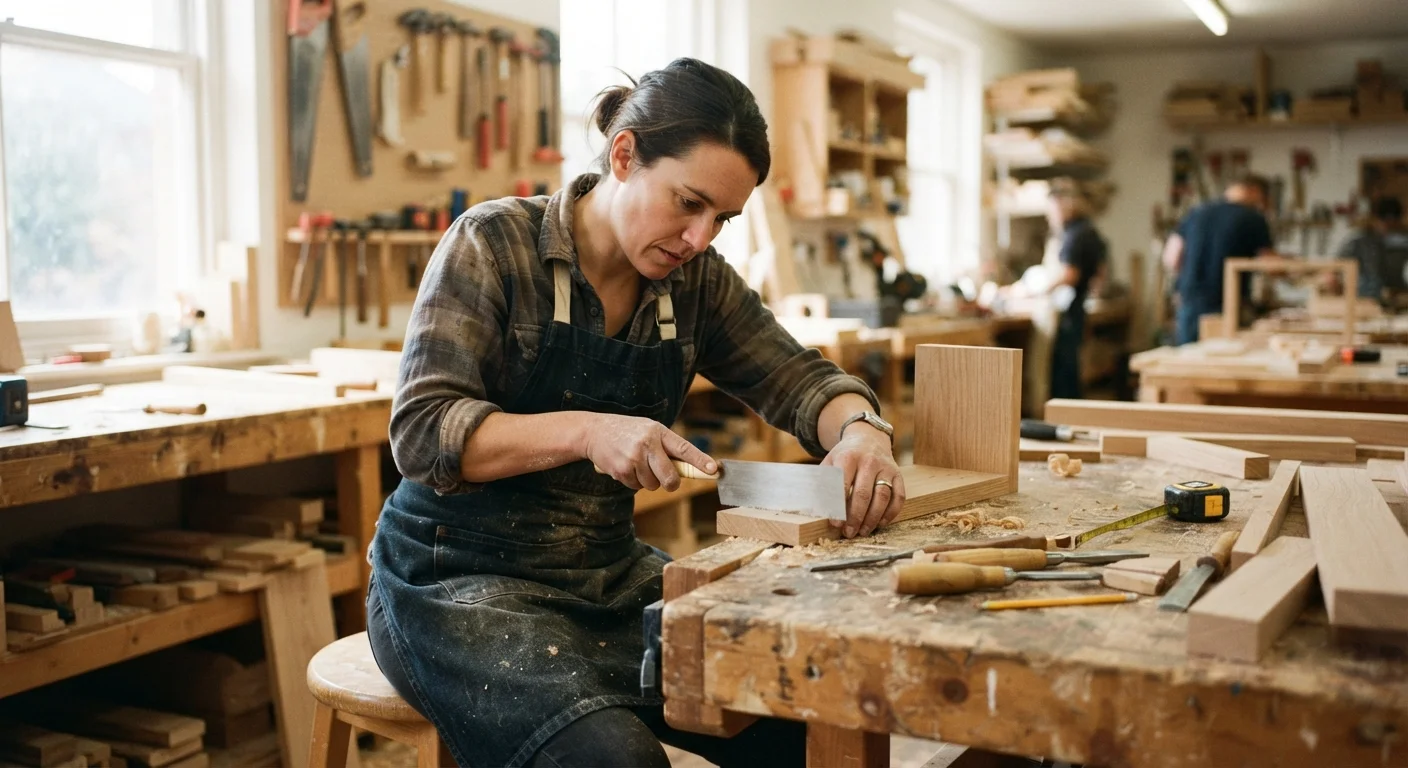
You Don't Need to Enroll to Learn Something Real
Formal courses have real value - but they're not the only path to a practical skill. Adults pick up useful, marketable, and personally meaningful abilities every day through hands-on experience, peer communities, and self-directed effort. The challenge isn't access to information; it's knowing how to structure your own learning so it sticks.
The approaches below work whether you want to refinish floors, learn basic coding, improve your cooking, or develop a skill that could eventually support your career. Each one is grounded in how adults actually build competence - through doing, feedback, and repetition with purpose. If you're curious about how self-directed learning fits into a broader growth plan, Self-Directed Learning: A Practical Starting Point for Curious Adults offers a solid foundation.
Start With One Skill, One Goal
Resist the urge to build multiple skills simultaneously when starting out. Choosing a single, well-defined skill - with one concrete project to complete - produces faster, more visible results. Once you've developed a learning rhythm, adding a second area becomes much more manageable. See Self-Directed Learning: A Practical Starting Point for help setting those initial goals.
Find a Mentor or Informal Apprenticeship
One of the most time-tested ways to learn a practical skill is to work alongside someone who already has it. A mentor doesn't need a teaching credential - they need experience and a willingness to share it. This can be a neighbor who builds furniture, a coworker who knows bookkeeping, or a community member skilled in auto repair.
Reach out directly and offer something in return: your time helping with tasks, assistance on a project, or simply genuine enthusiasm. Many skilled people are glad to pass on what they know when approached respectfully. This kind of relationship gives you real-time feedback that no textbook can replicate.
Real-time feedback from an experienced mentor is something no textbook can replicate.
Attend Community Workshops and Maker Spaces
Libraries, community centers, and local nonprofits regularly offer workshops on skills ranging from basic home repair to sewing, cooking, coding, and financial literacy. Many are free or offered on a sliding-scale fee. These sessions are intentionally designed for adults with no prior background.
Maker spaces - shared workshops equipped with tools and materials - are another underused resource. Found in many mid-size and large cities, they often offer orientation sessions, open studio hours, and peer-led learning nights. Showing up consistently is often enough to absorb a significant amount of practical knowledge from the community around you.
Maker spaces and library workshops put real tools and knowledgeable peers within reach at low or no cost.
Learn Through a Real Project
Choosing a concrete project - tiling a bathroom, building a raised garden bed, learning to cook a specific cuisine, or designing a simple website - gives your learning a clear target. Project-based learning forces you to confront real problems rather than abstract exercises, which deepens understanding and retention significantly.
Start with a small, completable project rather than an ambitious one. The sense of completion matters: finishing something real builds confidence and reveals exactly where your gaps are. This approach works especially well for home improvement skills, where the result is immediately visible and useful.
Finishing a real project reveals your skill gaps faster - and more honestly - than any quiz.
Use Structured Video Tutorials and Open Documentation
High-quality instructional video content exists for an enormous range of practical skills - woodworking, plumbing basics, electrical safety fundamentals, graphic design, and more. The key is to approach these resources with intention rather than passively watching. Pause, try the technique, and come back with specific questions.
Open documentation - official guides published by trade organizations, government agencies, or open-source communities - can serve the same function as a textbook without the cost. Pair written documentation with video when learning something tactile; the two formats reinforce each other. Keep in mind that self-teaching has real trade-offs, which are worth understanding before committing to complex skills - see The Honest Trade-Offs of Teaching Yourself a Complex Skill for a balanced perspective.
Pause video tutorials and practice immediately - passive viewing builds familiarity, not competence.
Join a Skill-Focused Community or Practice Group
Peer learning communities - whether in person or online - provide accountability, encouragement, and access to collective knowledge. Gardening clubs, woodworking forums, coding meetups, language exchange groups, and craft circles all function as informal schools. Members at different levels naturally teach and learn from one another.
The social dimension matters: research in adult education consistently shows that learners who feel connected to a community persist longer and practice more deliberately. Look for local meetup groups, neighborhood association programs, or interest-based online communities with active discussion boards and shared projects. This aligns closely with building a learning habit that fits a busy life - community creates natural checkpoints.
Learners embedded in a practice community tend to persist longer and improve more deliberately.
Apply Deliberate Practice Principles
Not all practice produces equal results. Deliberate practice - working at the edge of your current ability, with focused attention on specific weaknesses - builds skills far more efficiently than casual repetition. This means identifying what you can't yet do well, isolating that element, and working on it directly rather than defaulting to what you're already comfortable with.
Set small, measurable goals for each practice session. Keep a simple log of what you tried, what worked, and what didn't. Over time, this record becomes a roadmap for your own development. For a deeper look at why this approach outperforms general practice, see Deliberate Practice vs. General Practice.
Working at the edge of your ability - not your comfort zone - is what separates fast learners from slow ones.
Making Informal Learning Stick Over Time
The biggest risk with self-directed skill-building isn't starting - it's losing momentum after the initial enthusiasm fades. Building a consistent rhythm, even if that means just 20-30 minutes of focused practice a few times a week, outperforms occasional marathon sessions. Building a Personal Learning Habit That Survives a Busy Schedule offers concrete strategies for exactly this challenge.
It's also worth being honest about your skill's trajectory. If you're progressing toward something beyond casual hobby territory, the gap between dabbling and genuine competence requires deliberate attention - not just more time spent. Track your progress, seek feedback regularly, and don't hesitate to supplement informal learning with structured resources when you hit a real plateau.
When Formal Instruction Still Makes Sense
Some skills carry safety or legal requirements that informal learning doesn't adequately address - licensed electrical work, structural modifications, certain medical or financial certifications, and others. Before pursuing a skill informally, check whether your state or locality requires a license, permit, or supervised training. In those cases, a formal course or apprenticeship program isn't just useful - it may be legally necessary.
The content provided on our blog site traverses numerous categories, offering readers valuable and practical information. Readers can use the editorial team’s research and data to gain more insights into their topics of interest. However, they are requested not to treat the articles as conclusive. The website team cannot be held responsible for differences in data or inaccuracies found across other platforms. Please also note that the site might also miss out on various schemes and offers available that the readers may find more beneficial than the ones we cover.