

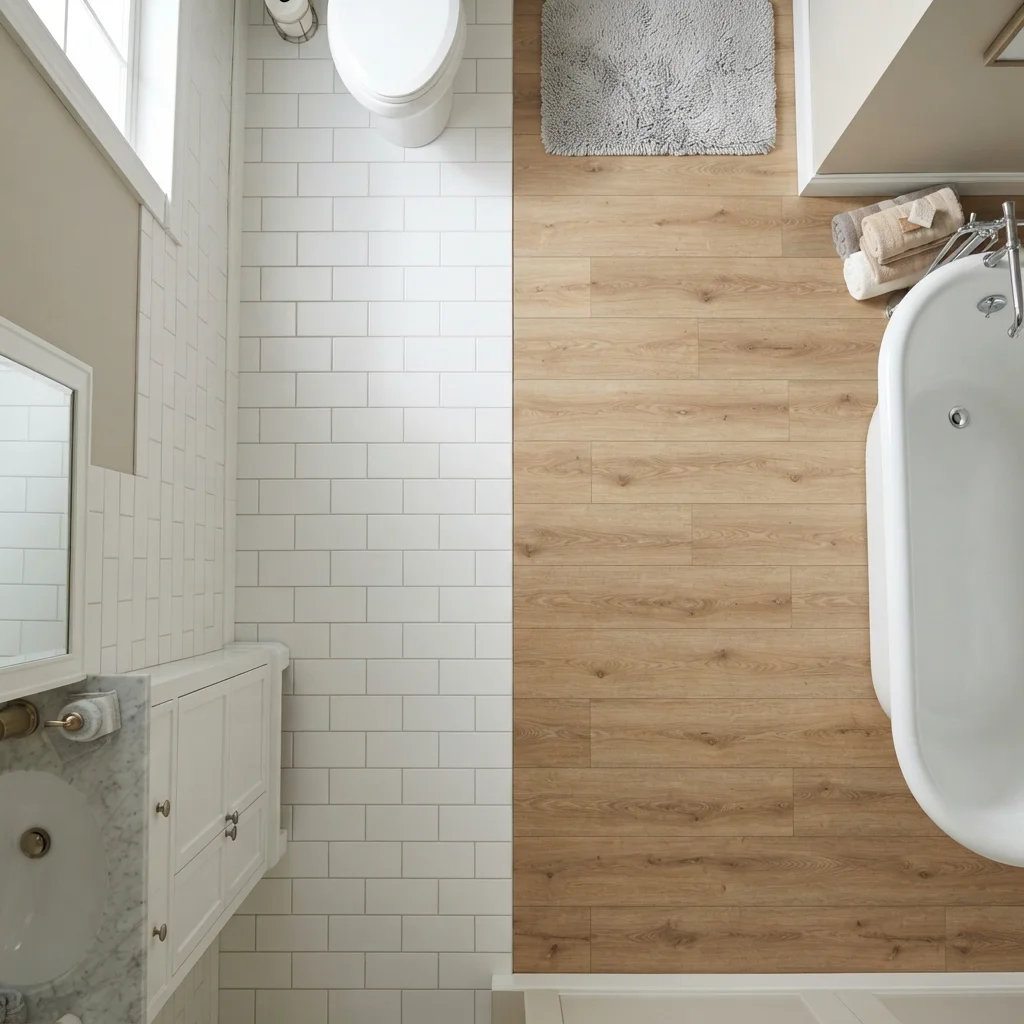
Option A
Ceramic or Porcelain Tile
The time-tested, fully waterproof classic.
Best for: Homeowners who want a permanent, high-durability floor and don't mind a more involved installation process.
Option B
Luxury Vinyl Plank (LVP)
The resilient, DIY-friendly modern contender.
Best for: Renters or homeowners seeking a faster, more affordable installation with a warm underfoot feel.
How Each Material Handles Moisture
Wet rooms - bathrooms, laundry rooms, mudrooms - demand flooring that can handle standing water, humidity, and frequent cleaning without warping, swelling, or delaminating.
Tile (ceramic or porcelain) is inherently waterproof at the surface level. The weak point is grout: unsealed or cracked grout lines can allow moisture to penetrate the subfloor. Regular resealing of grout (typically every one to two years) and prompt repair of cracked tiles keeps the system watertight.
Luxury Vinyl Plank is highly water-resistant and most modern LVP products are marketed as waterproof at the plank level. However, the seams between planks can allow water to seep underneath if the floor is subjected to pooling water or flooding. In most typical bathroom conditions - splashes, humidity, occasional drips - LVP performs reliably. It's less suited to rooms where water regularly sits on the floor for extended periods.
Check Manufacturer Specs for Wet-Room Use
Not all LVP products are rated for full wet-room installation. Always review the manufacturer's warranty and installation guidelines before purchasing - some products void their warranty if installed in bathrooms without specific underlayment or waterproofing measures. Similarly, for tile, confirm that your subfloor meets the deflection requirements to prevent future cracking.
Installation: Difficulty and What's Required
This is where the two materials diverge most sharply for everyday homeowners.
Tile installation involves setting a cement backer board, mixing and spreading mortar, laying tiles with precise spacing, allowing cure time, and then grouting and sealing. Mistakes are difficult to reverse, and cutting tile requires a wet saw. Most homeowners hire a professional for tile work, which adds to the total project cost.
LVP installation uses a floating click-lock system in most products. Planks snap together over an existing subfloor without adhesive, and the main tools needed are a utility knife, a rubber mallet, and basic measuring equipment. Most DIYers with moderate experience can complete a bathroom floor in a single day. Keep in mind that the subfloor must be clean, level, and free of moisture damage before either flooring type is installed.
| Criterion | Ceramic / Porcelain Tile | Luxury Vinyl Plank (LVP) |
|---|---|---|
| Waterproofing | Fully waterproof (grout must be sealed) | Water-resistant; seams can allow moisture |
| DIY Difficulty | High - requires mortar, grout, wet saw | Low - click-lock, basic tools |
| Comfort Underfoot | Hard and cold | Softer and warmer |
| Typical Lifespan | 50+ years with proper care | 15-25 years |
| Maintenance | Grout sealing required periodically | Sweep and damp mop only |
| Repair Ease | Individual tiles can be replaced | Full-floor replacement often needed |
| Installation Cost (Pro) | Generally higher labor cost | Generally lower labor cost |
Durability, Comfort, and Long-Term Maintenance
Tile is among the most durable flooring options available. Porcelain tile in particular resists scratches, stains, and heavy loads - a properly installed tile floor can outlast the home's other finishes by decades. The trade-off is that tile is hard and cold underfoot, which many people find uncomfortable in bathrooms, particularly on winter mornings.
LVP is softer, warmer, and quieter underfoot due to its composite construction. Quality LVP typically carries wear-layer ratings between 12 and 20 mils - thicker wear layers resist scratches and scuffs better. However, LVP can be dented by heavy appliances or furniture legs and may need full replacement sooner than tile if damaged, since patching individual planks mid-floor can be difficult.
15-25 yrs
Typical LVP lifespan in residential use
Industry estimates vary by product grade; thicker wear layers (20 mil+) trend toward the higher end of this range.
50+ yrs
Potential lifespan of properly installed porcelain tile
Longevity depends on correct subfloor preparation, quality installation, and routine grout maintenance.
1-2 yrs
Recommended grout resealing interval for wet rooms
High-moisture environments accelerate sealant breakdown; annual sealing is advisable in showers or laundry rooms.
For maintenance, tile requires periodic grout sealing and prompt crack repair; LVP needs only regular sweeping and damp mopping with a pH-neutral cleaner. Neither requires refinishing or waxing.
The content provided on our blog site traverses numerous categories, offering readers valuable and practical information. Readers can use the editorial team’s research and data to gain more insights into their topics of interest. However, they are requested not to treat the articles as conclusive. The website team cannot be held responsible for differences in data or inaccuracies found across other platforms. Please also note that the site might also miss out on various schemes and offers available that the readers may find more beneficial than the ones we cover.