

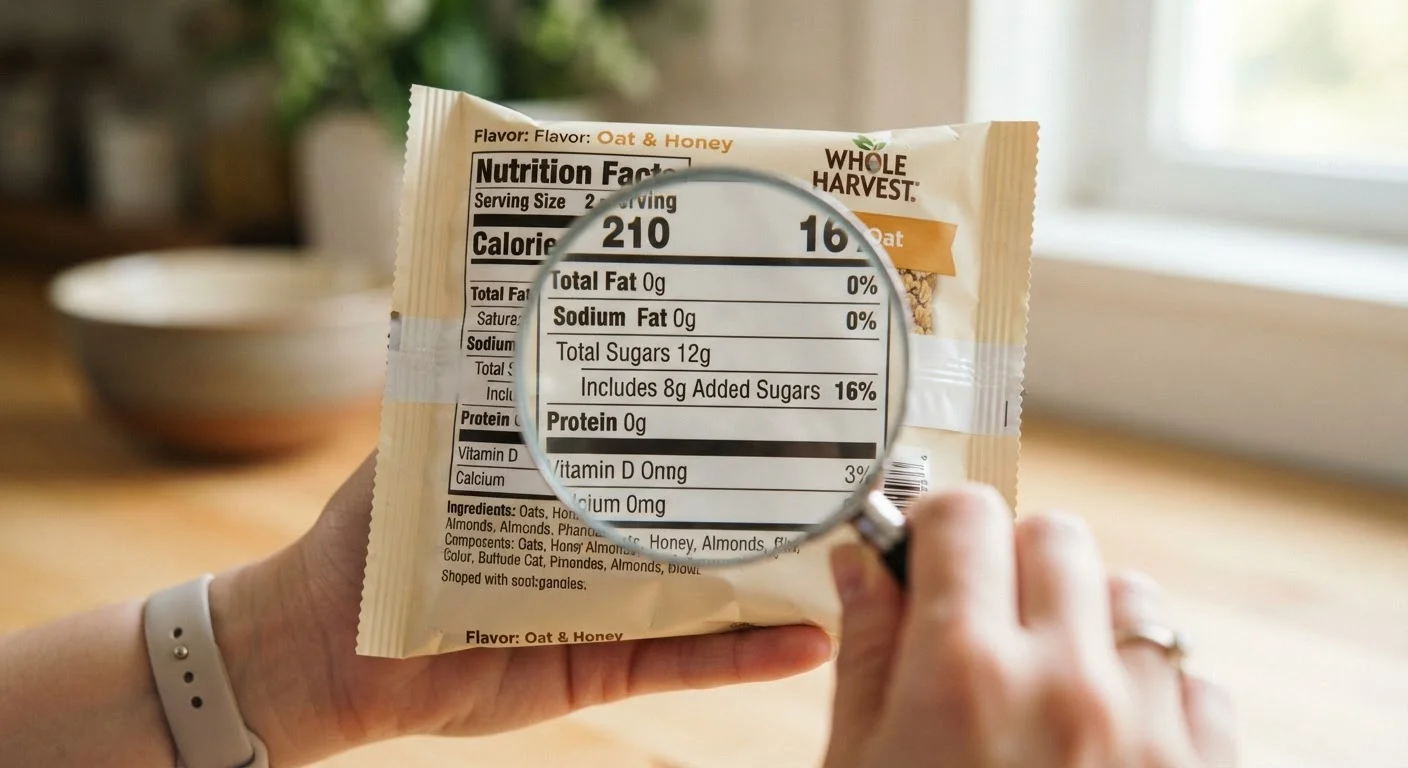
What Counts as Added Sugar
Added sugars are any sugars incorporated into food or beverages during processing or preparation - distinct from the sugars that occur naturally in whole fruit, vegetables, or dairy. The distinction matters because natural sugars arrive packaged with fiber, vitamins, and minerals that influence how the body processes them. Added sugars deliver calories with little accompanying nutrition.
Added sugars
Sugars and syrups added to foods or drinks during processing or preparation. They do not include naturally occurring sugars found in whole fruit, plain dairy, or vegetables.
Naturally occurring sugars
Sugars present in whole, unprocessed foods such as fructose in fruit or lactose in milk. Unlike added sugars, these come with fiber, protein, or other nutrients.
High-fructose corn syrup (HFCS)
A common sweetener made from corn starch, widely used in processed foods and beverages. It is one of the most prevalent forms of added sugar in the American food supply.
Daily Value (DV)
A reference amount used on Nutrition Facts labels to indicate how much a nutrient in a serving contributes to an average daily diet, based on a 2,000-calorie reference intake.
Common added sugars include sucrose (table sugar), high-fructose corn syrup, honey, agave nectar, maple syrup, molasses, dextrose, maltose, and fruit-juice concentrates. The FDA now requires manufacturers to list Added Sugars as its own line on the Nutrition Facts panel - directly below total sugars - which makes identification much more straightforward than it once was. See our label-reading strategies for a broader framework for navigating ingredient lists.
Surprising Places Added Sugar Hides
Desserts and soft drinks are the obvious sources, but added sugar appears in foods most people don't think of as sweet:
| AHA limit - women | ≤25 g added sugar/day (~6 tsp) (American Heart Association) |
| AHA limit - men | ≤36 g added sugar/day (~9 tsp) (American Heart Association) |
| Dietary Guidelines cap | <10% of daily calories from added sugar (Dietary Guidelines for Americans, 2020-2025) |
| Added sugar in a 12-oz cola | ~39 grams (USDA FoodData Central) |
| Label requirement | Added sugars listed separately on Nutrition Facts panel (FDA updated label rule, effective 2020-2021) |
| Common aliases on labels | Sucrose, HFCS, dextrose, maltose, agave, fruit-juice concentrate |
- Bread and crackers: Many commercial loaves list sugar or high-fructose corn syrup within the first five ingredients.
- Flavored yogurts: A single-serve container can contain more added sugar than a small candy bar.
- Pasta sauces: Jarred tomato sauce often adds sugar to balance acidity.
- Salad dressings: Especially low-fat varieties, which compensate for removed fat with sugar.
- Protein bars and granola: Marketed as health foods, these frequently carry 12-25 grams of added sugar per serving.
- Sports and energy drinks: A 20-oz sports drink can carry as much added sugar as a standard soda.
Beverages deserve particular attention. Liquid calories from sweetened drinks are easy to overlook because drinking doesn't trigger the same satiety signals as eating solid food.
How Much Is Too Much - The Numbers in Context
The American Heart Association (AHA) recommends that women limit added sugars to no more than 25 grams (about 6 teaspoons) per day, and men to no more than 36 grams (about 9 teaspoons). The Dietary Guidelines for Americans advises keeping added sugars below 10% of total daily calories - roughly 50 grams on a 2,000-calorie diet.
17 tsp
Average daily added sugar intake for U.S. adults
According to CDC analysis of NHANES dietary data, American adults consume roughly 17 teaspoons of added sugar per day on average.
10%
Recommended calorie cap from added sugar
The Dietary Guidelines for Americans (2020-2025) advise limiting added sugars to less than 10% of total daily caloric intake.
~39 g
Added sugar in one 12-oz regular soda
USDA FoodData Central data shows a standard 12-oz cola can carries roughly 39 grams of added sugar - exceeding the AHA's daily limit for women.
To put these limits in everyday terms: a single 12-oz can of a regular cola contains roughly 39 grams of added sugar - already over the AHA's limit for women, and close to the limit for men. A flavored coffee drink from a café can easily double that in one cup.
Consistently high added sugar intake is associated in epidemiological research with increased risk of obesity, type 2 diabetes, cardiovascular disease, and dental caries. However, individual context matters - activity level, overall diet quality, and metabolic health all influence how the body responds. This article provides general education, not personalized dietary advice. Consult a registered dietitian or your healthcare provider to understand what targets are appropriate for your situation.
This article is for informational purposes only and does not constitute medical or dietary advice. Always consult a qualified healthcare professional before making significant changes to your diet.
The content provided on our blog site traverses numerous categories, offering readers valuable and practical information. Readers can use the editorial team’s research and data to gain more insights into their topics of interest. However, they are requested not to treat the articles as conclusive. The website team cannot be held responsible for differences in data or inaccuracies found across other platforms. Please also note that the site might also miss out on various schemes and offers available that the readers may find more beneficial than the ones we cover.