

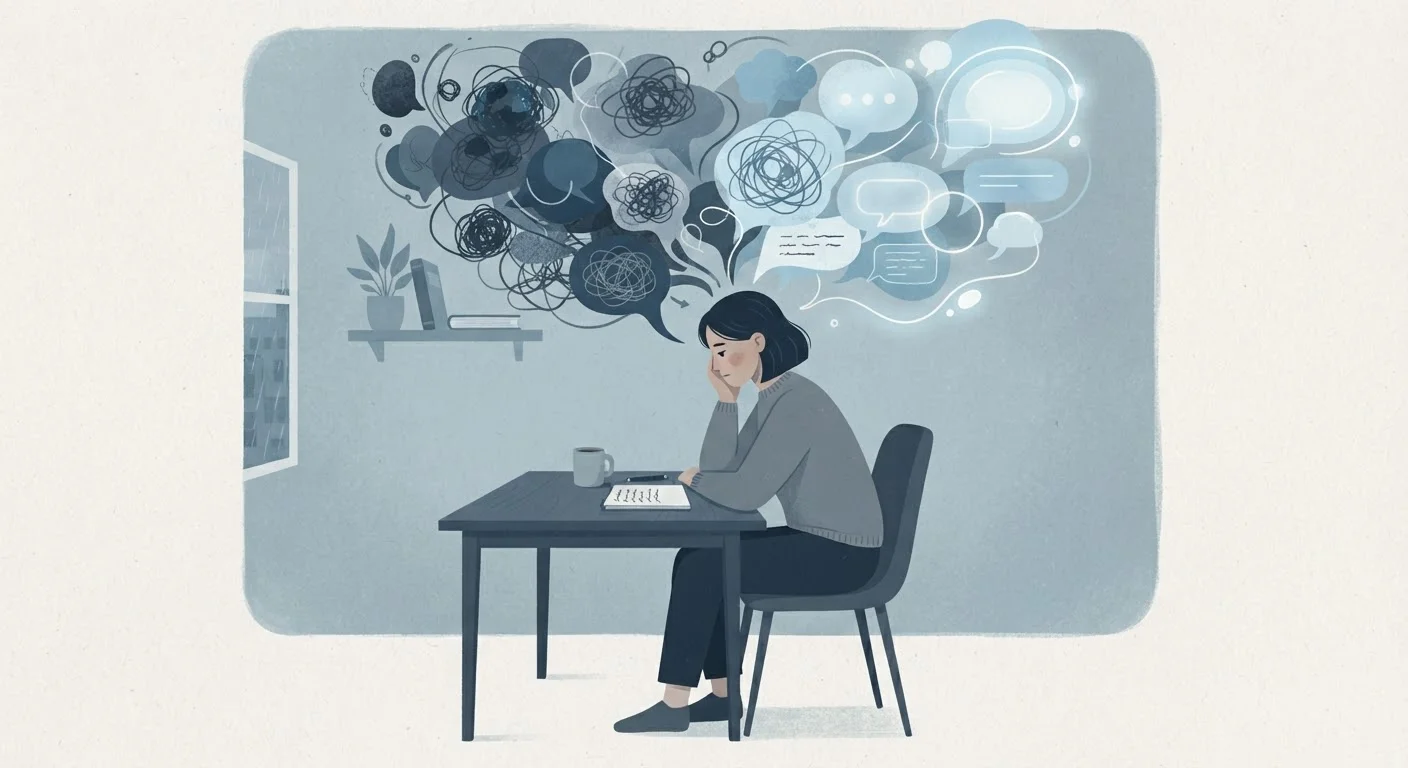
What Are Cognitive Distortions?
Cognitive distortions are systematic errors in thinking - mental shortcuts that skew how we interpret events, relationships, and ourselves. They're not signs of weakness or mental illness; they're patterns the human brain developed partly as survival mechanisms. The problem is that in modern daily life, they often misfire, turning manageable situations into sources of significant stress.
The concept was formalized in the context of cognitive behavioral therapy (CBT), largely through the work of psychiatrists Aaron Beck and David Burns. Research consistently links these patterns to elevated anxiety, depression, and chronic stress. Understanding them isn't about eliminating negative thought - it's about catching distortions before they quietly take the wheel.
| Concept Origin | Cognitive distortions were formally described in CBT literature, associated with Aaron Beck and David Burns |
| Number of Named Distortions | Researchers have identified over 10 common distortion types |
| Primary Therapeutic Approach | Cognitive Behavioral Therapy (CBT) (American Psychological Association) |
| Who Experiences Them | Everyone - they are normal features of human cognition, not signs of mental illness |
| Link to Stress | Distorted thinking patterns are consistently associated with higher anxiety, depression, and perceived stress (Journal of Cognitive Therapy and Research) |
If you've ever wondered whether your thinking habits are making stress worse, the Mental Wellness Personal Audit offers a structured way to examine your emotional patterns without clinical jargon.
The Most Common Thinking Traps
Below are the distortions that appear most frequently in everyday stress - and what they actually look like in practice.
Cognitive Distortion
A habitual pattern of inaccurate or exaggerated thinking that misrepresents reality and often intensifies negative emotions. These patterns are identified and addressed in cognitive behavioral therapy (CBT).
All-or-Nothing Thinking
Evaluating situations in absolute, black-and-white terms with no middle ground - everything is either perfect or a complete failure.
Catastrophizing
Automatically expecting the worst possible outcome and treating that outcome as highly probable, even when evidence doesn't support it.
Mind-Reading
Assuming you know what another person is thinking - typically something critical or negative - without direct evidence to support the assumption.
Overgeneralization
Drawing a broad, sweeping conclusion from a single incident, often using words like 'always' or 'never' to make one experience seem universal.
Emotional Reasoning
Using your current emotional state as evidence about objective reality - for example, feeling anxious and concluding that a situation is therefore genuinely dangerous.
Personalization
Taking excessive personal responsibility for events outside your control, often blaming yourself for outcomes that involve many other factors.
Cognitive Behavioral Therapy (CBT)
A widely researched form of psychotherapy that focuses on identifying and changing unhelpful thought patterns and behaviors to improve emotional regulation and reduce distress.
All-or-Nothing Thinking treats outcomes as binary - a presentation wasn't perfect, therefore it was a total failure. This pattern makes ordinary imperfection feel catastrophic and raises the emotional stakes of every situation.
Catastrophizing fast-forwards to the worst possible outcome and treats it as the most likely one. A delayed email becomes evidence your project is doomed. Research suggests catastrophizing is one of the strongest cognitive predictors of anxiety severity.
Mind-Reading assumes you know what others think - usually something negative about you - without any real evidence. "She didn't say hi, so she must be angry with me." This pattern strains relationships and generates social anxiety from thin air.
Overgeneralization draws sweeping conclusions from a single event. One awkward conversation becomes "I'm bad at talking to people." The language of overgeneralization often includes words like always, never, and everyone.
Emotional Reasoning mistakes feelings for facts: "I feel overwhelmed, therefore the situation is unmanageable." Emotions are real and valid - but they're not always accurate reporters of external reality.
Personalization assigns undue personal responsibility for external events. If a team project stalls, personalization says it's entirely your fault, ignoring the many factors outside your control.
These patterns rarely announce themselves clearly. They blend into the background of daily thinking, which is why they're worth naming explicitly. For a broader look at how distorted thinking intersects with stress management habits, see what people commonly get wrong about managing stress.
Why These Patterns Amplify Stress
Cognitive distortions amplify stress through a well-documented feedback loop: a distorted interpretation triggers an emotional response, which feels like confirmation of the original thought, which deepens the distortion. Over time, this loop can become automatic - the brain essentially learns to expect the worst.
~80%
Of anxious thoughts that never materialize
Research published in cognitive psychology literature suggests the vast majority of worry-based predictions don't come true, underscoring how distorted threat appraisals drive unnecessary stress.
1 in 5
U.S. adults experiencing a mental health condition annually
According to the National Institute of Mental Health, cognitive distortions are a key feature addressed in treatment for anxiety and mood disorders.
This matters physically, not just emotionally. Sustained stress responses driven by distorted thinking contribute to real physiological changes. The science behind chronic stress helps explain how ongoing mental strain translates into wear on your cardiovascular, immune, and nervous systems.
It's also worth noting that attempting to counter distorted thinking with forced optimism often backfires. Research on positive thinking suggests that acknowledging realistic, balanced perspectives - rather than pasting a cheerful veneer over difficult feelings - produces more durable emotional relief.
Distortions Are Not Character Flaws
Recognizing cognitive distortions in yourself is not a reason for self-criticism - it's a sign of self-awareness. These patterns are common, well-documented, and addressable. A trained therapist, particularly one who practices CBT, can help you work through them systematically.
This article is for general informational purposes only and is not a substitute for professional mental health advice, diagnosis, or treatment. If cognitive distortions are significantly affecting your daily life, consider speaking with a licensed therapist or mental health professional.
The content provided on our blog site traverses numerous categories, offering readers valuable and practical information. Readers can use the editorial team’s research and data to gain more insights into their topics of interest. However, they are requested not to treat the articles as conclusive. The website team cannot be held responsible for differences in data or inaccuracies found across other platforms. Please also note that the site might also miss out on various schemes and offers available that the readers may find more beneficial than the ones we cover.