

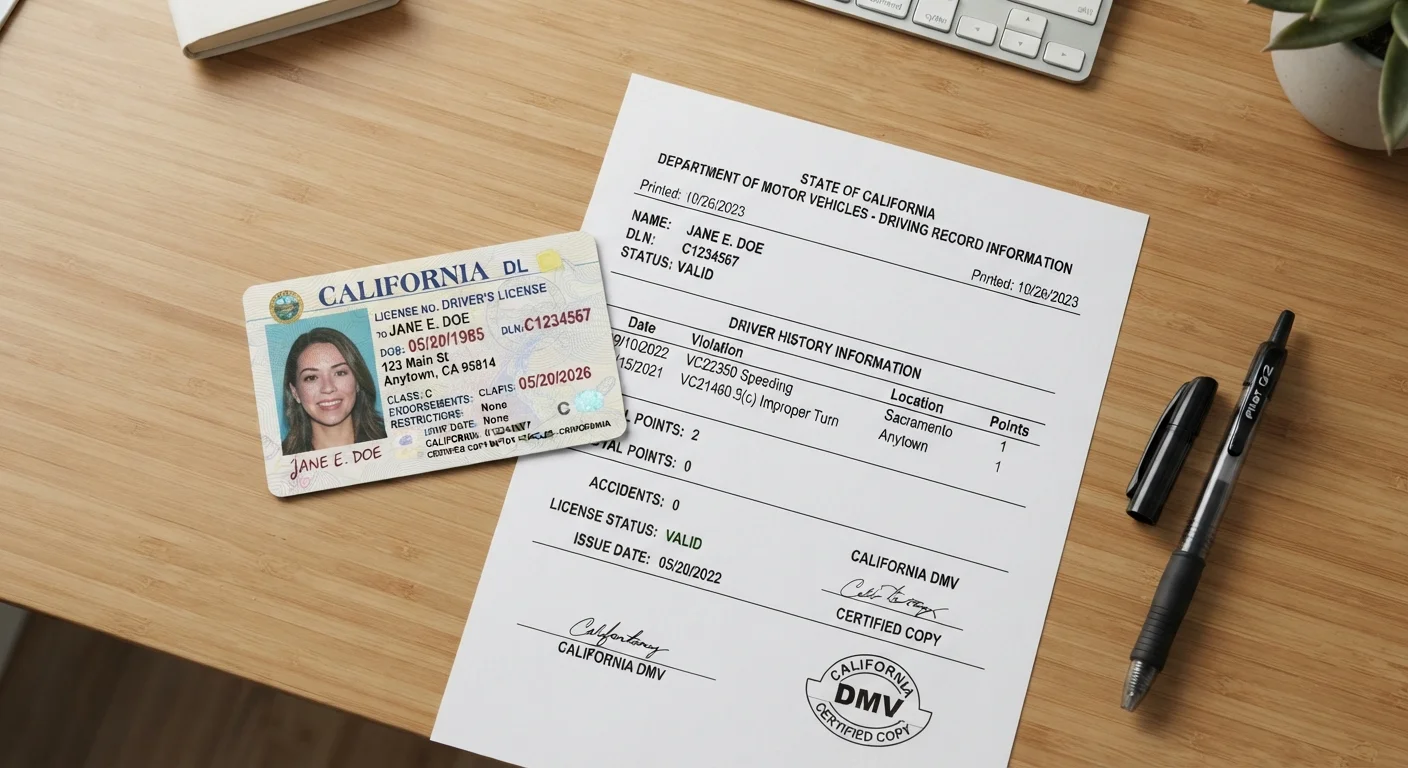
What Triggers Points on Your Record
Points are assigned when a driver is convicted of a moving violation - not simply cited. Paying a traffic ticket is generally treated as a guilty plea, which means the conviction is reported to your state's DMV and the corresponding points are added to your record.
Common violations and their typical point ranges include:
- Speeding (moderate, e.g., 1-10 mph over the limit): 1-2 points
- Speeding (excessive, e.g., 20+ mph over the limit): 3-5 points
- Running a red light or stop sign: 2-3 points
- Unsafe lane change: 1-2 points
- Reckless driving: 4-6 points
- DUI or DWI: 6-8 points, or an automatic suspension in many states
Non-moving violations - such as parking tickets or expired registration - do not typically generate points, though they may carry separate fines or holds on your registration.
How Points Accumulate and When Action Is Taken
States evaluate points within a rolling window - most commonly 12, 18, or 24 months. As older violations age out of the window, the points attached to them no longer count toward your current total.
When your point total crosses a state-defined threshold, consequences escalate in stages:
- Warning letter: Some states send a formal notice once you reach a certain point level, alerting you that you're approaching suspension territory.
- Probationary period: A driver may be placed on probation, during which any additional violation can trigger immediate suspension.
- License suspension: The DMV suspends your driving privileges for a defined period - often 30 to 90 days for a first suspension.
- License revocation: For repeat or serious offenders, a license may be fully revoked, requiring the driver to reapply and potentially retest.
How Points Clear and What You Can Do
The most straightforward way for points to clear is simply time. Once a violation ages past the state's lookback window, those points no longer count toward your active total - though the underlying conviction may still appear on your full record.
Beyond waiting, several options may be available depending on your state:
- Defensive driving courses: Many states allow drivers to complete an approved traffic safety course in exchange for a point reduction - commonly one to three points removed. This option is typically limited to once per year or once every few years.
- Traffic school diversion: Some courts offer first-time offenders the chance to have a conviction dismissed entirely upon completing traffic school, preventing points from being added at all.
- Contesting the ticket: If you believe a citation was issued in error, you have the right to contest it in court. A successful challenge means no conviction and no points.
Regardless of which route you take, checking your driving record periodically is a straightforward habit. Most states allow you to request your record through the DMV - often online - for a small fee or for free.
Points and Your Insurance Premium
Your driving record is one of the primary factors insurers use when calculating your auto insurance premium. While insurance companies use their own internal risk models - not the state's point system directly - a record with multiple moving violations signals elevated risk, which almost always translates to higher rates.
A single minor speeding ticket may have a modest effect, while a reckless driving conviction or DUI can substantially increase your premium for several years. The exact impact depends on the insurer, the severity of the violation, and your state's regulations on how long insurers can consider a given offense.
This article provides general information about driving record point systems for educational purposes. Rules vary significantly by state. Always verify current thresholds, timelines, and options directly with your state's DMV or a qualified legal professional.
Frequently Asked Questions
The threshold varies by state. Many states trigger a suspension between 12 and 15 points accumulated within a 12- to 24-month period. Check your specific state's DMV website for the exact threshold that applies to you.
Most points remain visible on your record for one to three years from the date of the violation. More serious offenses - such as DUI convictions - can remain on your record for five to ten years or longer, depending on the state.
Some states allow you to reduce your point total by completing a state-approved defensive driving or traffic safety course. The number of points removed and eligibility requirements differ by state, so verify with your local DMV.
Yes. Insurance companies often review your driving record when setting or renewing premiums. More points generally signal higher risk to insurers, which can result in higher rates. The impact depends on the insurer's policies and your state's regulations.
No. A verbal or written warning that does not result in a formal citation does not add points to your record. Only convictions of moving violations that are reported to the state DMV affect your point total.
It depends. Many states participate in interstate compacts - agreements to share violation data. If your home state receives notice of an out-of-state conviction, it may apply points to your in-state record according to its own point schedule.
The content provided on our blog site traverses numerous categories, offering readers valuable and practical information. Readers can use the editorial team’s research and data to gain more insights into their topics of interest. However, they are requested not to treat the articles as conclusive. The website team cannot be held responsible for differences in data or inaccuracies found across other platforms. Please also note that the site might also miss out on various schemes and offers available that the readers may find more beneficial than the ones we cover.